factory emissions

Scope 3 emission reporting cannot be ignored

Last November, the EU adopted the Corporate Sustainability Reporting Directive (CSRD), with fines and penalties for those failing to disclose their indirect (Scope 3) emissions. The phase-in period for CSRD begins on the 1st January 2024 and the UK has matched this timeline.

The directive increases the range of companies mandated to report, with almost 50,000 affected, and sets stricter requirements on the range of issues and quality of data which companies must disclose. 

The UK now requires large companies to report on their climate-related risks in line with the global Taskforce on Climate-related Financial Disclosures (TCFD), while the EU’s CSRD means that companies will be required to publish detailed information on sustainability performance.

Given the increasing appetite of investors and customers for engaging with sustainability leaders, stronger ESG metrics can also become a powerful competitive advantage.

In a poll of UK-based businesses to assess their readiness for Scope 3 reporting under CSRD, 96% had heard of the directive, 71% had measured their carbon footprint and while 40% were already to comply, 25% said they will not be able to meet the deadline.

There are warnings that many companies are underestimating what it will take to turn intent into action, with 40% overwhelmed during the last reporting period and 35% admitting that embedding ESG in the annual reporting process would be a squeeze with current lead timelines and staff levels.

One-third of the companies polled are delegating responsibility to the chief sustainability officer, another third to the chief executive and almost all said they are either hiring a specialist or enlisting an external auditor, while just under half are investing in digital solutions for emissions measurement and analysis.

Business leaders are uneasy about their new responsibility for reporting not only their own emissions but those upstream and downstream, and critically, businesses need to not only report, but also take steps to make reductions and improvements.  

The penalties are substantial; UK firms are set to be charged up to £40 per tonne of CO2 emissions misreported under the new regulations and consumers can be unforgiving which puts their reputations at risk.

With Scope 3, businesses have to think about their role as a supplier to customers and their role as a customer to suppliers and be able to accurately measure and report on emissions to understand where they are starting. 

Our MVT Eco module is already prepared for Scope 3 reporting of emissions that are not produced by your company and are not the result of activities from assets owned or controlled by you.

To request a demo or learn more, please EMAIL Ian Powell.

emissions ship

Sea freight ECO initiatives and their impact on shippers

Just months after IMO 2023 launched, the International Maritime Organisation raised its carbon emissions targets, which will require more carrier investment and with the EU rolling out its emissions trading scheme from next year, shipping lines will be looking to recover a lot of costs from shippers.

The revised IMO greenhouse gas strategy, adopted this summer, bought forward the target to reach net-zero GHG emissions “close to 2050” and will be achieved through mandatory reduction in carbon emissions for both new and existing ships, with clean or low-carbon fuel alternatives, and pressure growing to impose a carbon levy on international shipping, to fund climate mitigation.

The EU Emissions Trading System (ETS) is effective from the 1st January 2024, which means container shipping lines will need to purchase emission allowances while investing in alternative fuels. And with the lines looking at a potential ETS bill of €1bn in the first year, they will be looking to pass on the increased costs.

The European Union’s Monitoring, Reporting and Verification (EU MRV) regulation requires all ships exceeding 5,000 GT to collect and report data on CO2 emissions released to and from EU and EEA ports and will serve as the basis for shipping’s inclusion in the EU emissions trading system (ETS) from the 1st January 2024.

ETS is a ‘cap and trade’ scheme where a limit (the cap) is placed on the amount to emit specified pollutants and obliges individual shipping lines to hold an allowance for each tonne of CO2 or other carbon equivalent gases they emit.

There will be no set price list for these emission allowances – instead, the price will be defined by supply and demand on the market. 

EU ETS is determined on vessels rather than cargo: docked at an EU port 100%; travelling between EU countries 100%; and between an EU port and a non-EU port 50%.

The UK has notified that they will be introducing a similar system, which would have an impact on UK domestic routes and UK-EU routes.

Total annual EU ETS-applicable emissions for the maritime industry amounted to 83.4m metric tonnes of CO2 equivalent which, at the current market value of €90 per emissions allowance (EUA), shipping emissions carried a total worth of €7.5bn for the year.

Taking into account the ETS phase-in period covering 40% of emissions in 2024, 70% in 2025 and 100% in 2026, the shipping industry could be liable for €3.1bn in 2024, €5.7bn in 2025 and €8.4bn in 2026. With container shipping potentially accounting for 30% of overall emissions, despite carrying less than 20% of seaborne trade (source: OECD).

Maersk has calculated potential Q1 2024 emissions surcharge (in EUR) per FFE @ 70 (Far East to North Europe) and 81 (North Europe to USA).

We are following ETS developments, the carriers adoption of cleaner fuel technology and any other initiatives which may offer cost and efficiency savings for our shippers.

Our MVT Eco module measures and monitors the emissions of every shipment, by every mode, with offsetting alternatives, so our customers can work towards carbon neutrality in their global supply chain. 

The MVT Eco module is under continuous development, which could include adaptation to measure liabilities under the new EU ETS regime, if this is something we think may be useful to our customers.

To request an MVT Eco demo or to discuss any of the issues raised here, please EMAIL our CCO Andrew Smith.

European roadmap to recovery

EU’s carbon border initiative threatens 40% tariffs

The introduction of the EU carbon border adjustment mechanism (CBAM) places reporting responsibilities on companies trading with the bloc in carbon-intensive products from the 1st October 2023 and businesses will have to buy certificates to cover emissions embedded in products from 2026.

With CBAM tariffs likely to account for over 17% of the landed cost of applicable steel imports in 2030, rising to over 40% by 2034, CBAM will have a profound impact on the cost UK manufacturers pay for components sourced via the EU.

The paperwork and costs associated with the carbon tax will land on UK companies who supply to EU businesses, and could potentially be passed onto UK manufacturers sourcing components from the EU.

The British government is consulting industry over introducing a UK version of the EU’s carbon border tax, but with divergence between the two schemes, domestic businesses will need to demonstrate compliance with the EU’s rules.

Legislation going through the EU threatens more divergence, with the upcoming carbon border tax, plastic packaging rules and draft supply chain due diligence laws being discussed by member states.

From October this year EU companies will have to compile reports on the carbon emissions attached to some imported goods, including steel, aluminium and fertilisers and from 2026, there will be cost pressures factored into where suppliers are chosen.

One of the biggest challenges for UK businesses is the widely differing approaches of 27 individual EU member states to implementing regulations like the bloc’s requirement to recycle plastic packaging. 

When the UK was an EU member, companies were presumed to have complied for the entire single market, but now some countries apply rules more strictly than others, insisting that UK companies provide proof that plastic components of manufactured goods comply with regulations.

Trade associations and the British Chambers of Commerce say that now the UK is no longer automatically transposing EU law and the government needs to do more to assess the impact of future EU regulations, as well as using the Trade and Cooperation Agreement to work better with Brussels.

It remains to be seen what direct impact the carbon border initiative may have on our customers’ EU exports and imports. 

We will monitor the evolving situation to keep you informed and see where we might mitigate impact and in particular with the EU's reporting requirements.

Our MVT Eco module is already prepared for Scope 3 reporting of emissions that are not produced by your company and are not the result of activities from assets owned or controlled by you.

To request a demo or learn more, please EMAIL Ian Powell.

BAR Tech

Sustainability in the supply chain

Sustainability is good for business, because it builds brand value, meets consumer expectations, attracts talent and creates new opportunities, which is why Metro has been certified Carbon Neutral for two years and why we share the most important developments in sustainability.

Despite today’s economic uncertainties, consumers are still open to sustainable products if they are affordable and offer value, with 46% expecting brands to take the lead on bringing about sustainable change.

Wind-powered sustainability 

Fitted with giant, rigid British-designed sails (or wings), the cargo ship Pyxis Ocean's maiden journey, from China to Brazil, will provide the first test of the WindWings and is an opportunity to assess whether a return to the traditional way of propelling ships could be the way forward for moving cargo more sustainably at sea.

Folded down when the ship is in port, the 123 ft wings are opened out when it is in open water, to catch the wind, rather than rely solely on its engine and are expected to reduce a cargo ship's lifetime emissions by 30%.

Each wing saves one-and-a-half tonnes of fuel per day, so with four wings on a vessel, six tonnes of fuel is saved, which is equivalent to 20 tonnes of CO2 saved each day. The numbers are massive.

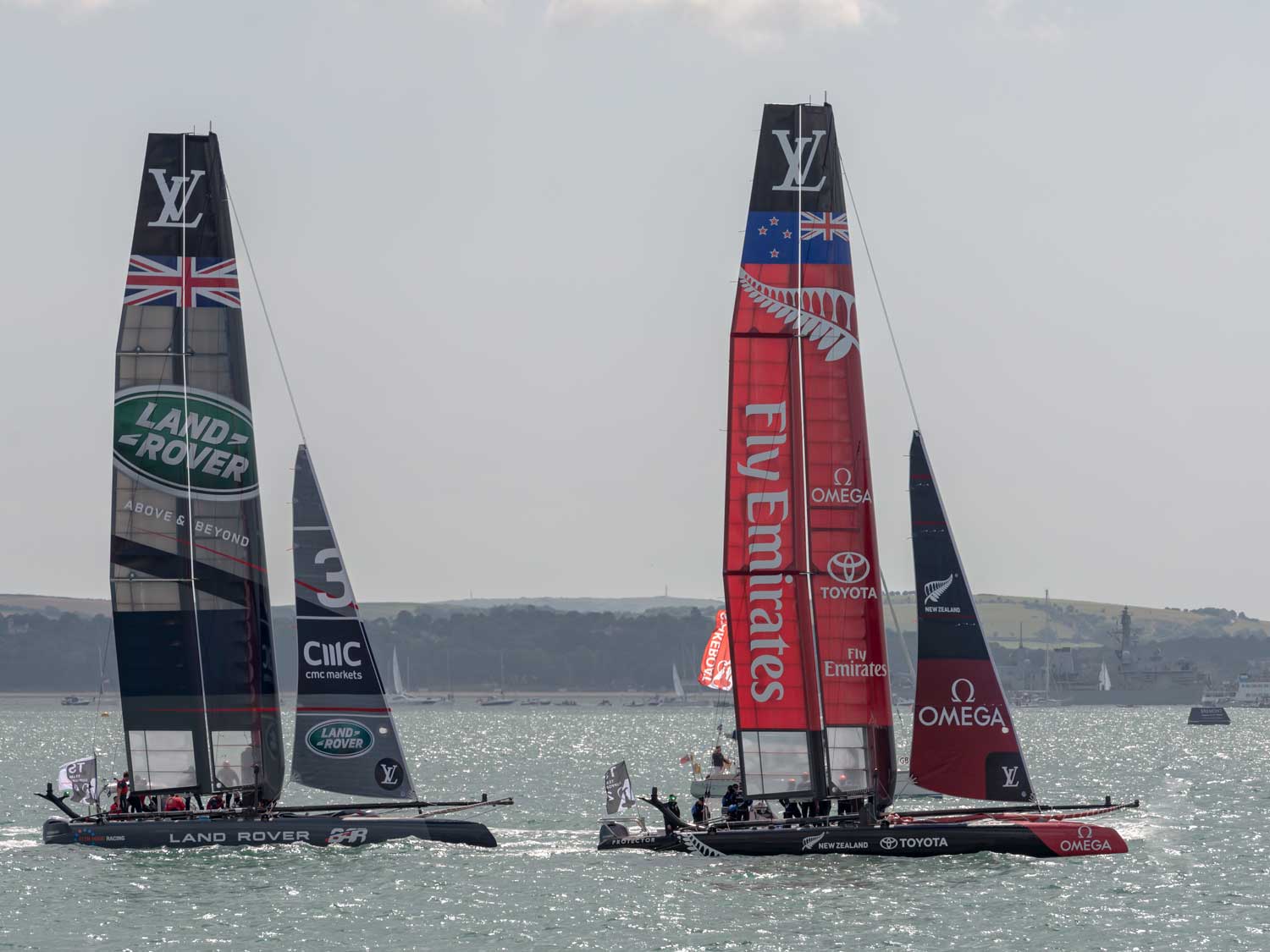
The wing sail technology on Pyxis Ocean was spun out of Sir Ben Ainslie's 2017 America's Cup boat design, with the firm behind to predicting that this voyage will be a turning point for the maritime industry and that by 2025 half the new-build ships will be ordered with wind propulsion.

UK businesses not ready for emissions reporting

Large businesses and SMEs which trade in the EU will need to conduct sustainability reporting to stricter standards from January 2024, but 60% are not prepared and risk penalties of £40 per tonne of CO₂ emissions misreported.

The Corporate Sustainability Reporting Directive (CSRD) was initiated in January and requires businesses which trade in the EU to conduct sustainability reporting to stricter standards from January 2024, with research finding that 60% of businesses may not be prepared to meet the new requirements for Scope 3 emissions reporting by the deadline.

Scope 3 refers to indirect emissions that are caused not by an organisation itself, but by other businesses and activities somewhere along the value chain, which often account for a huge portion of a company’s overall value chain emissions and can be 60-90% of the overall carbon footprint.

Companies that don’t properly report their Scope 3 emissions before the January deadline not only risk fines but also losing customers, with 49% saying they would look elsewhere if a business were to be fined for non-compliance and 17% saying they would never use that business again.

Certified carbon neutral for two years, Metro has joined the West Midlands Net Zero Business Pledge, to support efforts to make the West Midlands a net zero carbon economy by 2041. 

We are committed to zero landfill waste as part of our WM Net Zero Business Pledge, installing new recycling bins at our Birmingham HQ, together with more electric charging points, as we are replacing our fleet with electric vehicles within the next 12 months.

Metro is measuring and monitoring the emissions of every shipment, by every mode, for all of our customers, with offsetting alternatives, so they can work towards carbon neutrality in their global supply chain. 

Our MVT Eco module has reported over 100,000 shipments, with a total CO2 equivalent of more than 300,000 tonnes in 2023.

MVT Eco uses reporting methodology that is in conformance with the Global Logistics Emissions Council (GLEC) and incorporates 30 pre-built charts and downloadable statements, to simplify Scope 3 reporting compliance for customers in the EU and UK.

The MVT ECO module is available free-of-charge to customers on their MVT dashboard. To request a demo or discuss your requirements, please EMAIL Simon George.