IKEA

BBC report underlines importers woes

The impact that the pandemic-driven global supply chain challenges, disruption and increased costs experienced since last year will have for consumers in 2021 has been bought into sharp focus by BBC News this week.

Continuing supply chain issues and the massive increases in the cost of shipping goods from Asia to the UK, Europe, The USA and, in fact, globally on most trade lanes, is creating a growing shortage of components for manufacturers and finished consumer products from home furnishings, bicycles and sports kit to children’s toys and garden furniture.

Scarcity of empty containers at key origins combined with continued (and increasing) demand for vessel space from China has quadrupled sea freight prices in the space of weeks, with costs hitting record highs as shippers compete to secure space on vessels. Some shipping lines even adopted the tactic of auctioning capacity to the highest bidder from China, further destabilising the market.

The European Sporting Goods Industry, whose members include Nike, Puma and Adidas, said delays were having a “huge impact”, while Halfords has reported gaps in its stock caused by shipping problems and mentioned freight costs and disruption in its latest trading update.

Trade body Bicycle Association said: “There's been disruption, and the cost of securing containers is up to 10 times higher than a year ago.”

In a survey of 900 small and medium-sized companies, 77% reported experiencing supply chain difficulties in the past six months, which was in line with comments from the international shipping association Bimco, who said issues were predominantly “affecting the small importers and retailers rather than the Tescos, Walmarts and Ikeas of this world” which ship more cargo and tend to be prioritised by carriers.

But even the “Ikeas of this world” are not entirely secure, as the BBC’s “Garden furniture shortage no picnic for retailers” reports:

People hoping to spruce up their gardens, ready for when we can socialise in them again, may face problems with their seating plans due to a lack of outdoor furniture.

A combination of high demand and shipping problems is being blamed for the shortages.

Furniture giant Ikea is among the retailers experiencing supply issues.

The Leisure and Outdoor Furniture Association, which represents 70 manufacturers and wholesalers, said all of its members have problems with supply and are being charged anywhere between $7,000 and $10,000 to ship containers from China.

"Some have even been quoted up to $17,000 to bring one container over," they told the BBC. All of which could have a knock-on effect on prices and availability for consumers.

Click HERE to read the BBC article in full.

We are aware of some importers that still have product/orders to ship from Asia due to load in the final quarter of 2020 and have still not been loaded (not Metro customers, may we add). In addition, some low-value product clients have been cancelling orders as they simply cannot sustain the shipping costs within their unit price and still return a profit, and they are looking at sourcing from regions closer to the UK and Europe.

More than ever, supply chains need to be resilient to withstand today’s challenges, which is why our award-winning MVT digital platform is invaluable in providing milestone/event management control, visibility and flexibility to protect our customers’ supply chains and identify and alert issues as soon as they occur so that corrective action and alternative solutions can be considered. 

It is anticipated and widely reported by carriers, industry bodies and manufacturing organisations that the demand for freight will continue, and the challenges in the industry will remain for the rest of the year and possibly beyond. We will continually monitor and update you weekly with the latest developments in the logistics sector.

For further advice and information on current market developments and intelligence please contact Grant Liddell.
Ocean market update

Shipping lines imposing new round of surcharges and rate rises into quarter 2

The container shipping industry continues to face heavy port congestion and vessel delays worldwide. The situation adds to the severe lack of vessels and empty equipment availability, forcing carriers to blank sailings on some trades when these sailings could generate record revenues, encouraging the lines to impose a new round of peak season surcharges and rate increases.

Many of the most important North American, European and Asian ports are the most congested and disrupted, as they try to process unprecedented volumes of imports, when COVID-19 has reduced the number of available workers and, COVID-safe working practices have reduced operational capability, meaning they are processing fewer box movements each shift.

The real cost of port congestion for the carriers is the loss of revenue from sailings that have to be cancelled.

For a typical container ship transporting a load of 4,000 x 40’ containers between Shanghai and Los Angeles, the revenue generated could be in the region of $16M for the outbound voyage.

With an average seven day delay outside Los Angeles currently, the lines are losing capacity equivalent to 343,000 FEU, which would have otherwise been in deployment, and the opportunity cost to the lines is simply enormous.

In addition to the loss of revenue on the outbound sailings, the blanking of these sailings also reduces the possibility of repositioning the empty containers in China for the backhaul voyages.

Although the challenges of limited space, lack of containers, and poor scheduling are most notable on Asia's major trades to Europe and North America, the impact of what happens on these key routes ripples out to impact elsewhere. 

Wherever possible, the shipping lines have taken actions to replenish equipment stocks in Asia, and blank sailings omit ports to get schedules back on track to avoid further delays.

The impact of these actions has meant that exports out of Europe have been affected, as the bigger paying and higher revenue trade out of Asia take priority.

Capacity for laden exports out of Europe to Asia have been cut to allow for the repatriation of empty equipment, while services to the Middle East are omitting ports to arrive in China with equipment faster, and the natural blanking of sailings means that there is less capacity available in the market. 

This has meant that traditional ‘back haul’ trades have seen big increases in freight rates and the introduction of peak season and other surcharges, increasing the cost of shipping exports out of Europe on all major and key trades.

Our market intelligence leads us to anticipate that some of the larger increases the lines are seeking will be proposed for Q2 onward, which is in addition to the new peak season surcharge (PSS) that will be applied.

Currently, the largest freight increases seen for April and Q2 are being applied to the US and Canada. With the carriers advising a lack of capacity and vessel space, they are likely to take the opportunity to apply large increases.

Freight increases and PSS, are almost certain on Asia trades and Australia and Mexico look likely too.

It should also be noted that more carriers are looking to capitalise on the market conditions by charging guaranteed shipment fees to avoid cargo being rolled, though we remain sceptical about the lines ability to deliver the service, given the chaos on so many terminals

Summary of announced increases/ PSS:

  • CMA – Ex North Europe to Asia (China / North + South Asia) $250.00 per container effect 01.04.2021
  • Hapag / OOCL – Ex North Europe to US – Freight Rate increases of $1000.00 per 40HC effective 01/04/2021
  • Hapag – Ex North Europe to Canada – Freight Rates increasing by $300.00 per TEU effective 01/04/2021
  • MSC – Ex North Europe to Australia - Rate increases of £300.00 per TEU effective 01/04/2021

Metro negotiate rates and volume agreements with a broad portfolio of carrier and alliance partners to offer our shippers the widest range of service offerings, port-pairings and rates.

Our bespoke solutions uniquely reflect our customers’ requirements and expectations. For further information, contact Ian Barnes, who would be delighted to talk to you about your situation. 

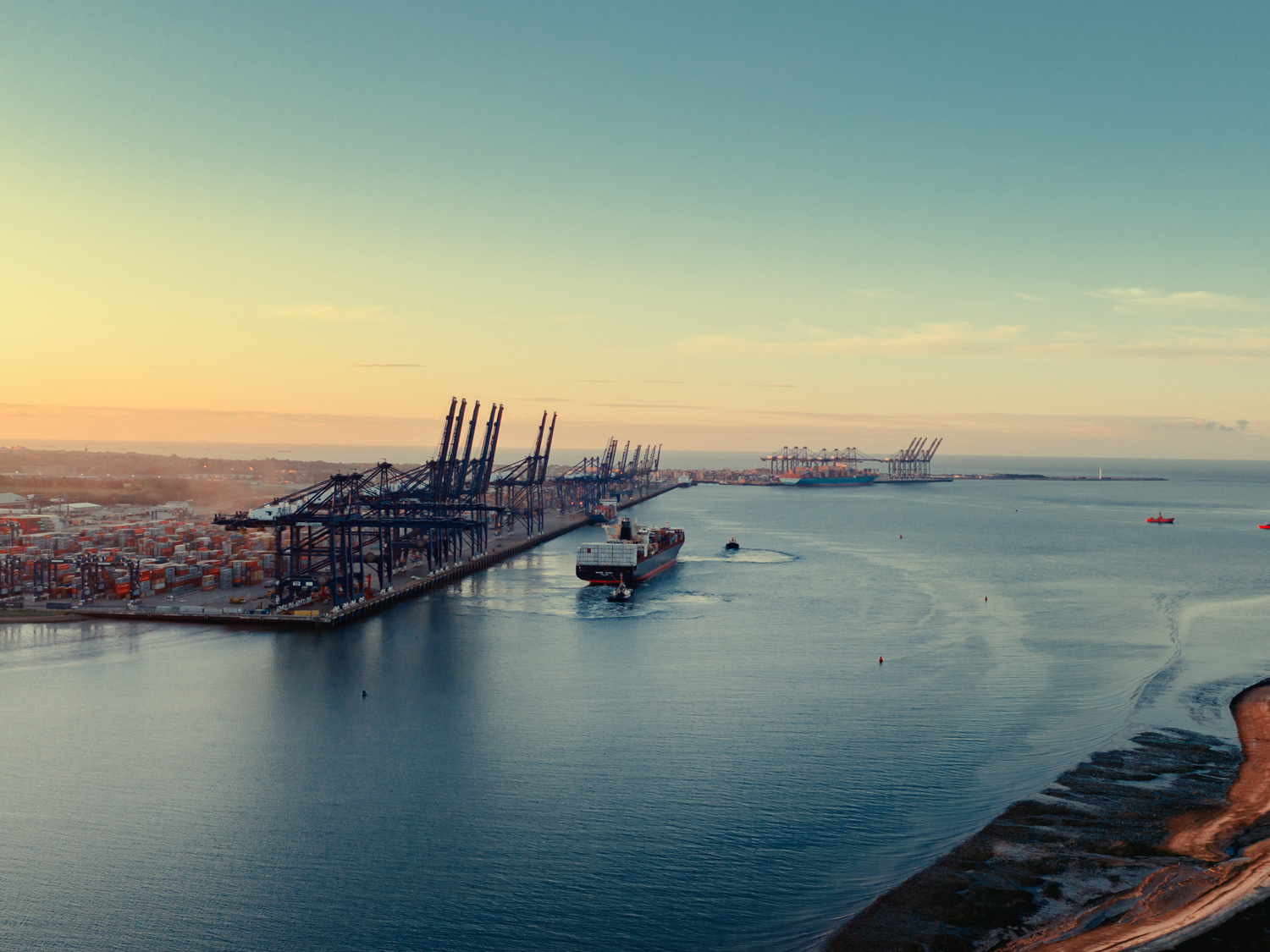
FXT at dawn

Global sea freight latest weekly update

The leading container shipping lines believe that global port and inland infrastructure congestion could last until after the summer peak season and the blanked sailings keep on coming.

The lines’ view is that supply chain disruptions are “temporary issues”, which would be resolved in the long-term, but they are warning of a “difficult” period leading up to the start of the traditional peak season.

There is reticence to predict when things would get back to normal, given that carriers had not seen the usual slowdown after the Chinese new year and their pipeline of cargo and short-term volume projections remain very strong.

The unprecedented spike in demand from Asia in the second half of last year caught the lines out entirely. Despite getting volume forecasts from the biggest cargo owners and shippers in March and April, no one anticipated the colossal surge in demand that was to transpire.

Import volumes surged as high as 100%

Import spikes of 40%-50% caused massive congestion at Felixstowe, which quickly filtered to ports across the country, while in the USA spikes surged as high as 100%, especially on the west coast, which put a massive strain on systems that were not designed to be resilient to a sustained surge over more than 30 weeks.

The congestion at UK ports continues, contributing to a “critical build-up” of empty equipment at Southampton and Felixstowe, while Liverpool is experiencing severe landside delays and long turnaround times for vehicles, with the problem appearing to be a lack of straddle carriers to serve the landside operation.

Recognising the crippling impact of equipment shortages, the lines have worked to ensure that every available container has been used, even those that needed repairs, in order to increase equipment inventory.

Increasing equipment inventory is having little impact

But increasing inventory will have little impact while global supply chain performance is so diminished, in so many areas, in so many critical regions.

Container ships are left waiting at anchor for a berth in Los Angeles - over 30 anchored vessels at the most congested times - and when they do finally get a berth, working is hit by slow operations on the terminals, with some vessels spending a further fortnight alongside.

At the other end of the supply chain the situation is mirrored, with congestion causing vessel turnaround times to more than double and week-long cargo rollovers at Singapore.

Vessels are regularly waiting two weeks to berth on US west coast

And finally……….freight rates from North Europe to the USEC have not been subjected to the massive increases impacting other routes, but that could change if carriers focus on maximising returns, by increasing the number of blank sailings, to move ships to more profitable trades.

The level of announced blank sailings for March and April are at the consistently elevated levels, we have seen since last year. We are monitoring the situation closely and wonder if, rather than an attempt to drive up rates, the lines are trying to compensate for the chronic port congestion on the US west coast, where an average of 30 ships a day are idled at anchorages.

We will continue to report on and explain the factors behind this exceptional global supply chain situation, that is the result of a convergence of factors triggered by the pandemic.

We are also preparing contingency plans and following developments at the port of Montreal, where a previously negotiated truce agreement between employers and unions is due to expire on March 21st, 2021, with the very real threat of industrial action.

The unprecedented surge in cargo demand will continue to create congestion across all nodes in the global supply chain, due in large part to constrained COVID-safe working practices.

A lack of usable empty containers will not be resolved while laden ones are held up at operationally ineffective nodes and the shipping linesschedule reliability dropping to 10-year historical lows, adds further to the delays at almost every seaport worldwide.

Visibility provided by our MVT tool, developed in-house and ongoing over the last 15 years, the expertise of our dedicated and motivated locally based teams, our global partnerships with our own offices and partners, and close relationships with shipping line partners, combined ensure we are at the forefront of the industry and always best positioned to deliver the most relevant and required solutions in an ever evolving ocean market.

Coronavirus accelerates rise of the super carrier

Q1 review & Q2 sea freight market report

Time never stands still in global logistics, and as we come towards the end of the first quarter of the year (Q1) and approach the second (Q2), we take a moment to reflect on how 2021 has started, and how we see the deep sea markets further adjusting and progressing as we move into the next period.

On the Asia - Westbound trades, as 2020 came to a close, the vessel space and capacity issues that had been ‘all’ consuming, were overtaken by acute equipment shortages across the entire Asia region, resulting in destabilisation of supply chains globally.

With container shipping demand further peaking and carriers demanding and achieving, high freight rates in the spot market, in addition to a selection of additional surcharges, incredibly, vessels started to depart Asia at less than capacity.  This was the direct result of a substantial lack of equipment of all types being available to load, in the areas where they were needed.   

Facing immense and sustained demand, the carriers scrambled to take action to mitigate this problem, by attempting to replenish equipment stocks, and avoid losing the high rate revenues from less than full vessels. 

Immediate actions included moving empty containers, instead of laden exports from key markets such as Europe and the Americas, in order to turn the equipment around more quickly. However, due to congested ports, caused in the main by a slowdown in operations due to Covid processes and unreliable vessel schedules missing berthing slots, which in turn contributed to port congestion and further transit delays, empty containers have largely remained stuck across the world, in places where they are not needed. 

As we started Q1 the view of the shipping lines was that issues of equipment and space would start to ease and then continue to improve as we entered Chinese New Year. However, as Chinese New Year began, some carriers then took the late decision to blank sailings, with the stated objective of returning fleets to their scheduled operations. 

This however, did not allow the much needed capacity to be cleared at Far Eastern origins, or support the urgent replenishment of empty equipment to areas where it is most desperately needed. This has further accentuated the issues and prolonged the situation into March.

As we look ahead to Q2, the issues that we all expected to ease, are still there. Schedule reliability is at its lowest recorded level, (dropping to 34. 9% in January for container shipping lines according to Sea-Intelligence’s latest Global Liner Performance (GLP) report,) rates remain very high and vessel capacity and equipment continue to be very tight, with demand further escalating after the Asian holiday period. 

Shipping lines and cargo owners are reporting strong order books well into the Q2, and with the expected loosening of lockdown measures throughout the UK, Europe and the rest of the world, as the vaccine roll out grows, we can expect demand to remain high until the summer and possibly beyond.

The carriers are maintaining their peak season charges throughout Q2, and market rates remain very high for both contract renewals, and in the spot market. Some shipping lines have actually announced increases to their peak season surcharges, at an unseasonal time such as Hapag Lloyd, from the 1st March. Confidence from the carriers is very ‘bullish’ still.

Operational challenges are also not unique to the Far East. Port congestion, equipment shortages and schedule reliability are being experienced across the Indian Sub-continent, North America, Australia, Europe, and the Middle East. Basically an inescapable global supply chain position and issue.

The West Coast of America right now has some major issues with over 60 vessels currently held up outside  the port of Los Angeles for weeks, creating more delays and further slowing down the evacuation of equipment back to the manufacturing regions . 

Because of these global issues and challenges, the role of an expert Freight Forwarder has never been so important to keep supply chains moving. Metro continue to work as a partner and on a collaborative strategic approach with all of our clients ensuring the best fit solution and all alternatives are offered in the current dynamic market, ensuring every option is available as part of the supply chain decision making process.

At Metro, the visibility provided by our MVT tool, the expertise of our dedicated and motivated teams, our global partnerships with local agents, and close relationships with shipping line partners, combine to provide our customers with sustained support and solutions in challenging times.