Tariff 2

The UK’s post-Brexit tariff regime

Announced in May, the UK Global Tariff (UKGT) is the UK-specific tariff regime that will apply to goods imported into the UK from January 2021, with tariffs on an additional £30bn of imported goods cut to zero.

During the Brexit transition period, until 31 December 2020, the EU Common External tariff continues to be applied to goods imported into the UK. 

Once the transition period is over, the UKGT will apply to goods imported into the UK from countries which the UK does not have a Free Trade Agreement and not covered by any other exemption.

Analysts reviewing the Border Operating Model released in July have uncovered indications that May’s UKGT may not be the final operational version.

The Border Operating Model confirms that “The tariffs applicable to UK importers will be published…when they are finalised and before implementation”. Which suggests, perhaps unsurprisingly, that the UK’s tariffs are part of the negotiation tactics and are unlikely to be the final version, until the outcome of the trade negotiations are known. 

It is still critical that businesses work with the best information available to prepare their Brexit modelling and understand the impact of the new UK Global Tariff on goods imported into the UK from 1 January 2021.

The UKGT includes a UK applied Most Favoured Nation tariff schedule that is intended to apply to all countries by default, although this may change with respect to EU countries depending on the deal reached by the UK with the EU.

The UKGT will not apply to:

 - Countries that the UK has a trade deal with

 - Countries that are part of the UK Generalised Scheme of Preferences (more information on this can be found HERE)

 - Where an exception applies, such as relief or tariff suspension

What are some of the key changes?

The net effect of the tariff regime according to a summary by the Department for International Trade is as follows:

 - 47% of products will be tariff-free, compared to 27% under the CET and

- Average tariffs will be reduced from 7.2% under the CET to 5.7% under the UKGT

This is achieved through changes to rates of tariff by lowering rates, reducing rates to zero or rounding rates down.

Outside of these changes, the UKGT will convert CET rates into GBP sterling and maintain tariffs in certain sectors including agriculture, ceramics and chemicals.

What could the UKGT mean for business?

The impact of the UKGT on business will depend on what the UK’s trade relationship looks like with the EU and the relevant business sector. This is currently a moving picture.

In the event of a no-deal Brexit, it is likely to become more expensive to import goods from the EU to the UK as tariffs will now apply to certain goods from the EU where they have not previously applied. With time in increasingly short supply, it is time to take stock (perhaps literally) to ensure additional costs are factored into the business planning process.

However, businesses importing goods from outside of the EU into the UK are likely to benefit from the UKGT due to the Government liberalising, simplifying and reducing tariff rates on a number of goods meaning importation should be comparably cheaper.

For further information and advice on our Brexit brokerage solutions, please contact Grant Liddell or Chris Carlile for assistance.

Istanbul

Turkey and UK close in one Free Trade Deal

As the UK and Turkey close in on a free trade agreement to boost bilateral trade up to £15 billion by 2023, Metro is enhancing our freight services to and from the region.

Turkey is “very close” to signing a free trade agreement with the UK covering manufactured goods, agriculture and services, Turkey’s foreign minister has told the Financial Times.

The UK is Turkey’s second-largest trade partner after Germany, and securing an FTA with Britain is deemed critical for Turkish manufacturers, particularly carmakers, textile factories and white goods producers. 

Total UK-Turkish trade hit a high of £18.8bn last year, with £7.9bn in British exports, and £10.9bn of Turkish imports to the UK, with more than 2,500 UK companies operating in Turkey including BP, Shell, Vodafone, Unilever, BAE Systems and Diageo. 

Turkey’s main exports to the UK are vehicles, white goods and clothes.

Turkey is a member of the EU customs union, which means they can't sign a free trade agreement (FTA) with the UK before the completion of the EU-UK trade agreement.

For UK companies trading with Turkey, Metro provides a wide selection of service departures, transit times and freight modes to ensure that you get your product delivered on time, at the best price, every time. 

Our teams in the UK, along with our partners in Turkey, arrange national collections and deliveries, while managing daily full load operations and receiving export cargo at our freight centres for the secure groupage services, which depart three times weekly. 

Metro’s groupage service is unbeatable for consolidating your smaller consignments of cartons and pallets together for cost-effective transport to and from Turkey.

Our 13.6M tilt-sided trailers offer over 100 cubic metres of loading space, which makes our groupage services so economical and means we can handle the biggest full load requirements.

For ultra-heavy and outsize cargo we can position specialist equipment and, when appropriate, offer a total project-shipping service.

Specialised equipment is also available for temperature sensitive products and hanging garments.

For valuable and urgent shipments our driver accompanied road trailers move door-to-door without transhipment or route deviation, with a transit time of just seven days. 

We also offer the environmentally appealing option of a sea freight leg between Turkey and Northern Europe, which cuts road miles by over 50%, offering a significant cut in CO2 emissions per M3.

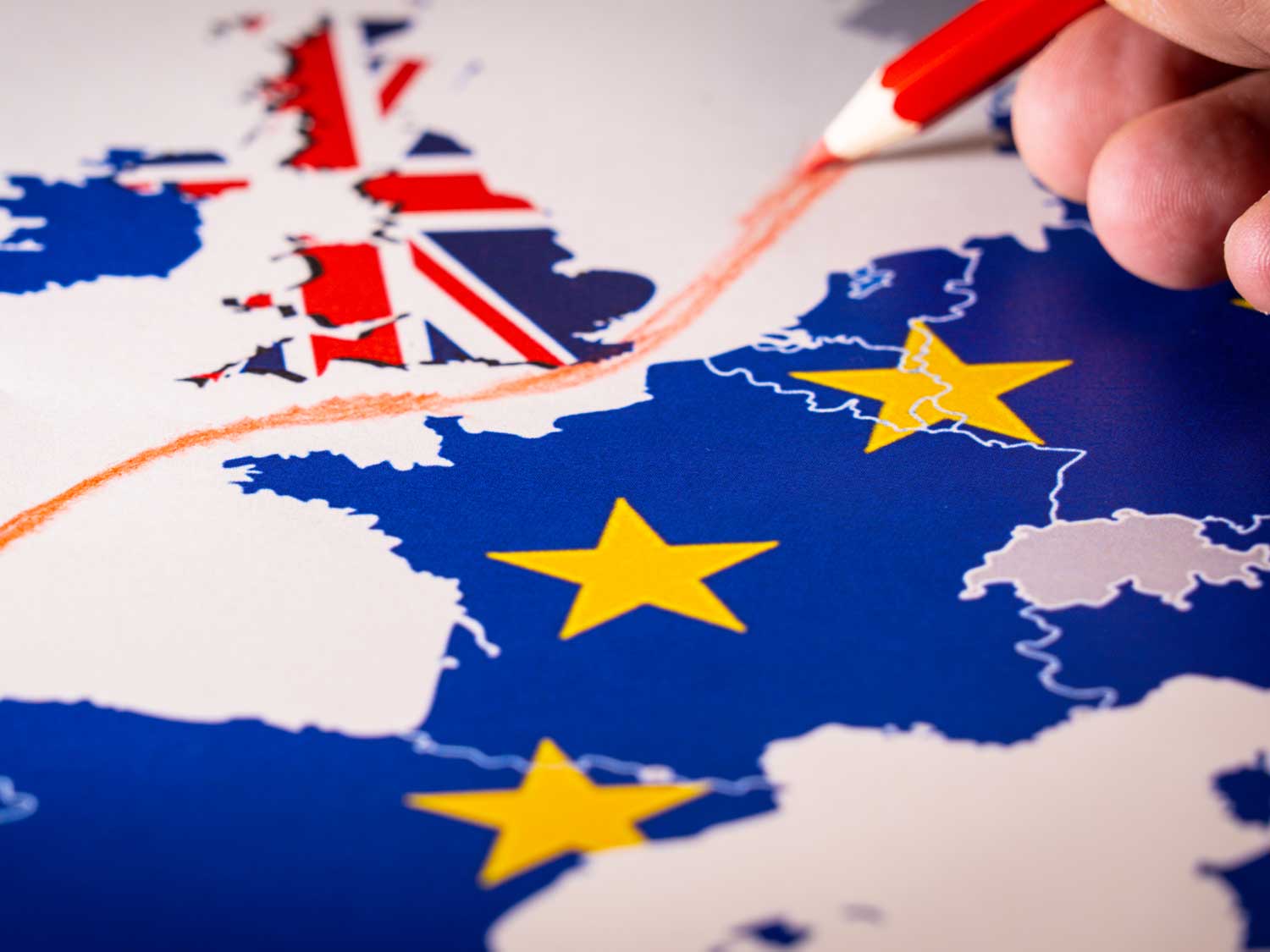
Brexit red line

How Britain’s EU exit affects ‘rest of the world’ international trade

Brexit means more than renouncing the trade deals of our 27 European counterparts. It’s also about losing the 41 EU-third country trade agreements in 72 separate countries.

As we plummet towards the end of the Brexit transition period, the focus has been on securing a trade deal with the EU to facilitate trade with those who reside in the European single market. With 43 percent of all UK exports to the EU, and 51 percent of all imports coming from the EU, it is clear why this is the primary focus.

However, EU-third country trade agreements have been neglected, with 11 percent of total UK trade coming from nations with EU trade agreements. In the case of a ‘No-Deal’ scenario, the UK stands to lose more than the trade deals directly with EU. We will also lose the 41 European trade deals, spanning across 72 countries external to the European Union.

It is imperative to consider the EUR1, a customs document used in trade between EU members and countries where specific trade agreements exist for preferential tariffs - will no longer be valid for tariff preferences on exports or imports with countries operating under the agreement leaving the UK.

The EUR1 is a movement certificate (a certificate of origin) that you need to claim a preferential rate of duty (usually zero) when moving goods between the EU and the countries on the agreement list. Countries on this list include: 

Albania, Algeria, Bosnia/Herzegovina, Ceuta and Melilla, Chile, Columbia, Egypt, Faroe Islands, Honduras, Iceland, Israel, Jordan, Lebanon, Liechtenstein, Macedonia, Mexico, Montenegro, Morocco, Nicaragua, Norway, Panama, Peru, Serbia, South Africa, Switzerland, Syria, Tunisia, Turkey, Ukraine, West Bank/Gaza Strip.

A consequence of a ‘No Deal’ scenario is the failure to produce the EUR1 document, which will result in a bill for normal customs tariffs.

However, agreements with the following countries and trading blocs are expected to take effect when existing EU trade agreements no longer apply to the UK, which have been negotiated already by the UK government from 1 January 2021:

Andean Countries, CARIFORUM trade bloc, Central America, Chile, ESA trade bloc, Faroe Islands, Georgia, Iceland and Norway, Israel, Jordan. Kosovo, Lebanon, Liechtenstein, Morocco, Pacific states, Palestine Authority, South Korea, SACUM trade bloc, Switzerland and Tunisia.

If negotiators fail to reach a deal, the UK faces the prospect of trading with the EU and their beneficiary countries under the basic rules set by the World Trade Organization (WTO).

Metro is committed to help provide clarity and transparency to our customers, and offer advice and guidance through these turbulent times

For further information, please contact Jade Barrow or Andrew White who are leading our 2021 EU withdrawal Task Team.

Power of attorney

Import broker essential documents – Power of Attorney

This essential piece of documentation is required to demonstrate to Customs (under legal provisions) that authority is granted to act in your name and on your behalf.

A ‘Power of Attorney’ (POA) - also known as a ‘Letter of Empowerment’ - refers to the authorisation required to be given to the customs broker on behalf of the importer or exporter.

It is a standard piece of documentation that gives the forwarder/broker vital information needed to begin handling “customs business” on behalf of the client. A POA must be signed by an officer of the company making the shipment.

The POA should provide supporting documentation that they are authorised to act on the business’ behalf and that document should be fully recognised by the laws of the country in which the business is licensed.

The POA will remain in effect “UNTIL REVOKED”, which gives both the entity and their forwarder / broker the opportunity to revoke the POA at any time.

When an Importer or Exporter is asked to complete the POA, there are some key points of information that must be provided in entirety to allow the broker to act on their behalf:

  • The Type of Entity that encompasses the client.
  • Individual.
  • Partnership – has a TWO year limitation.
  • Corporation.
  • Sole Proprietorship.
  • Limited Liability Company.
  • Full legal name of the entity.
  • State in which the entity is registered.
  • Resident or Entity Place of Business.
  • Designation of the Broker or Forwarder who is going to be handling the customs business for the importer or exporter.
  • Signature, Capacity and Date of the Signor.

The POA has seen ubiquitous use throughout some of the world’s leading economies and countries, including the EU and USA. This document will only become more significant in the future.

For further information, or to attain a copy of our POA template and current Brexit brokerage update, please contact Grant Liddell or Chris Carlile for assistance.