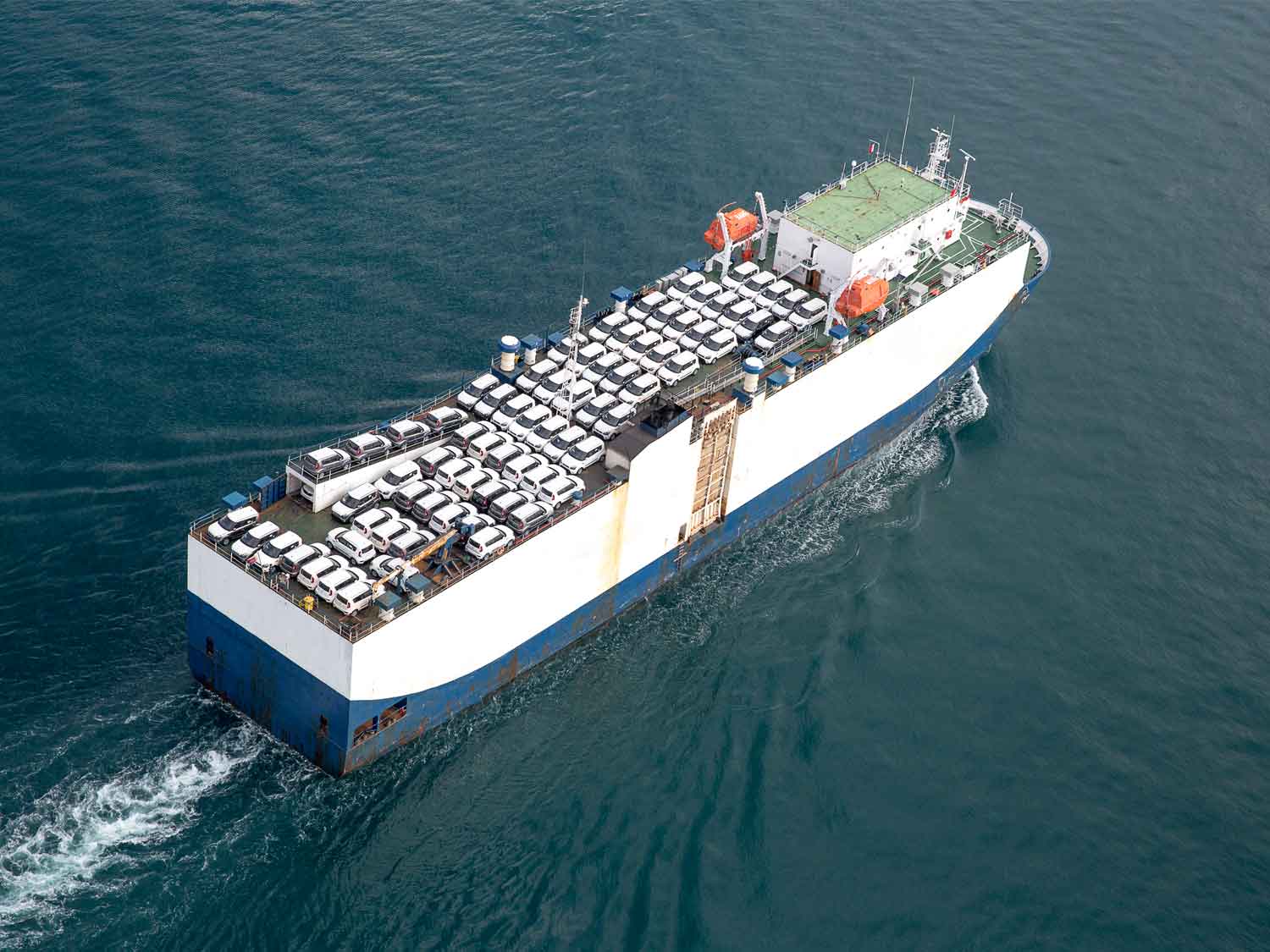
It wasn't long ago that securing space on a RoRo vehicle carrier was one of the biggest challenges facing automotive manufacturers. A shortage of Pure Car and Truck Carriers (PCTCs), soaring charter rates and surging Chinese vehicle exports created an exceptionally tight global market.
That picture is beginning to change. A significant wave of new vessel deliveries is increasing global capacity, charter rates are easing and vehicle production is becoming more regionalised as Chinese manufacturers establish factories closer to overseas markets.
For manufacturers, the challenge is no longer simply securing vessel space. Understanding how changing trade flows, regional production and evolving carrier networks affect future supply chains will be just as important.
Fleet expansion is reshaping capacity
The global PCTC fleet is undergoing its largest expansion for many years. New generations of car carriers, many capable of transporting more than 9,000 car equivalent units, are entering service with dual-fuel propulsion and future-ready designs that support lower-emission operations.
Overall fleet capacity is expected to increase by around 40%, fundamentally changing the supply-demand balance that drove record charter rates during 2023 and 2024.
As additional vessels enter service, daily charter costs have fallen significantly from their historic highs, easing some of the pressure that has affected vehicle exporters over the past two years.
For automotive manufacturers, this represents a welcome improvement in available capacity, although freight markets remain far from returning to pre-disruption conditions.
Competition is intensifying
China's vehicle exports have surged by more than 60% this year, with Europe emerging as one of its fastest-growing overseas markets. Chinese brands continue to gain market share, particularly in the UK and parts of Southern and Eastern Europe.
However, the next phase of expansion is unlikely to rely solely on long-haul exports.
Faced with higher import tariffs in Europe and North America, Chinese automotive manufacturers are accelerating investment in overseas production. New assembly plants are being established across Europe, South America, Southeast Asia, India and South Africa, allowing vehicles to be built closer to customers while reducing tariff exposure.
For the RoRo sector, this creates a dual dynamic. Long-haul exports from China are expected to moderate over time as production shifts closer to end markets, while regional and short-sea vehicle movements within Europe are likely to grow as new production facilities come online. Investment in new European short-sea vehicle carriers already reflects these changing trade patterns.
Additional investment supports employment, strengthens regional supply chains and creates greater demand for automotive logistics across the continent. At the same time, European manufacturers face increasing competition, making resilient and efficient supply chains even more important.
Project cargo remains under pressure
While finished vehicle logistics should benefit from the expanding fleet, the outlook is less positive for project cargo and other high and heavy freight.
Construction equipment, agricultural machinery, industrial vehicles and oversized project cargo continue to compete for limited specialist deck space. The newest PCTCs are optimised for passenger vehicles rather than abnormal loads, meaning stowage flexibility for oversized freight remains constrained despite overall fleet growth.
Meanwhile, longer voyages around the Cape of Good Hope continue to absorb vessel capacity following disruption in the Red Sea, while higher bunker costs and operating expenses are maintaining commercial pressure on older and smaller RoRo vessels.
For shippers moving specialist equipment, early planning and close coordination with carriers remain essential to securing both space and suitable stowage.
Automotive supply chains need greater agility
The RoRo market is becoming more balanced, but not necessarily simpler. Vehicle production is becoming increasingly regional, trade routes are evolving, environmental regulations continue to influence fleet investment and geopolitical developments remain capable of reshaping shipping patterns with little warning.
For UK and European automotive manufacturers, success will increasingly depend on logistics partners that understand both global vehicle flows and local manufacturing requirements, helping them respond quickly as sourcing patterns and transport networks continue to evolve.
Drive resilience with Metro
Metro has extensive experience supporting OEMs, Tier 1 suppliers and automotive manufacturers with integrated international logistics solutions.
Our specialist automotive teams work across Europe, Asia and North America to secure RoRo capacity, manage complex vehicle movements and develop contingency plans when market conditions change.
Whether moving finished vehicles, production components or specialist project cargo, Metro combines global carrier relationships with local expertise to keep automotive supply chains moving efficiently and reliably.
To discuss your automotive logistics requirements and discover how Metro can strengthen your supply chain, EMAIL Andrew Smith, Managing Director.