Shipping line CEO sees signs of June recovery

The world’s largest container shipping lines – and there are not that many!

With around 80% of global trade transported by sea and three major shipping alliances controlling 95% of the critical trade lanes from Asia to North America and Europe, a handful of shipping lines have massive influence over the cost and effectiveness of international trade.

The three major shipping alliances - 2M, THE Alliance, and Ocean Alliance - were formed in 2017 to support economies of scale, low prices and broad service coverage. These three alliances account for 80% of the global container market, with greater market share on many trade routes.

The high fixed-cost structure of shipping lines is one of the main arguments for shipping lines to collaborate. The rationale being that each liner service requires investment in a number of vessels to complete round trip voyages between different ports, which will sail on fixed dates regardless of how much cargo they are carrying, often leading to very poor utilisation, which is cost ineffective and environmentally unfriendly. 

However, allowing collaboration between carriers, means that the alliance partners can agree to operate a liner service along a specified route using a specified number of vessels. It is not necessary for each alliance member to allocate equal numbers of vessels, because the space that is available for loading and discharging at each port of call is shared between the partners.

The amount of space that each partner gets may vary from port to port and could depend on the number of vessels which are operated or placed by the different partners within the agreement and means that the partners have flexibility to meet demand and increase utilisation rates, which reduces operating costs and boosts efficiency.

Collaboration in this way has allowed the alliances to leverage each partner’s geographic strengths to develop more comprehensive global shipping networks, which have extending coverage and provide more routes, which improves the service offerings for their customers.

Entering alliances seems to be a good fit for smaller lines, that benefit from the extended service coverage and larger shipping lines who can bleed their assets. This is demonstrated in the different strategies of MSC and Hapag-Lloyd, with the former focused on organic growth and the rapid growth of its fleet, while Hapag-Lloyd has been collaborating in partnerships since 1989 and has only recently committed to the acquisition of the mega-ships, that have become synonymous with the rise of the alliance on the trade lanes from Asia.

The three major shipping alliances collectively account for 80% of the shipping market and include all of the biggest container lines:
2M Alliance: Maersk and MSC
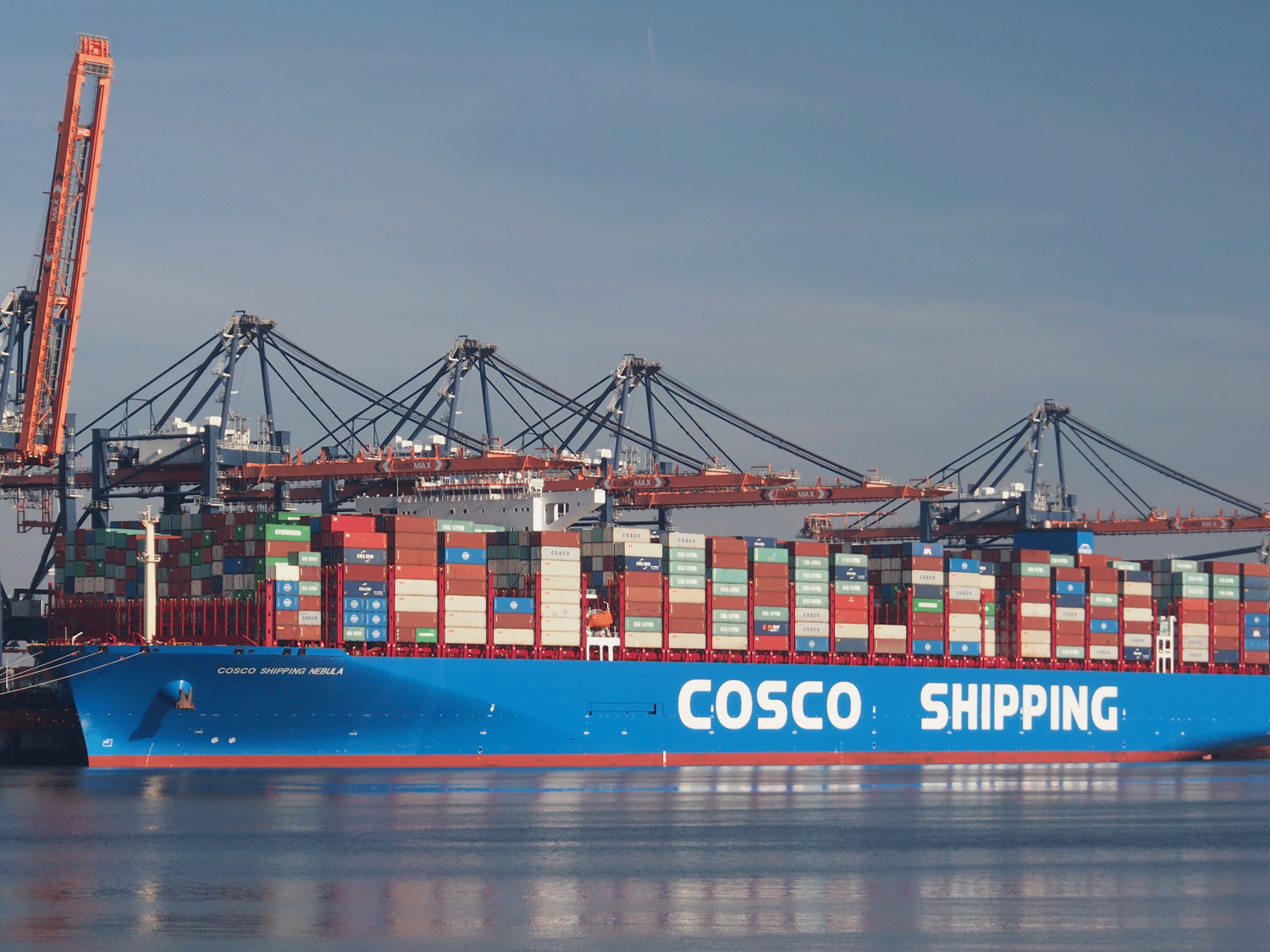
Ocean Alliance: COSCO, OOCL, CMA CGM, and Evergreen
THE Alliance: Hapag-Lloyd, ONE, Yang Ming , HMM

Courtesy of Alcott Global - alcottglobal.com

Metro leverage opportunities across the shipping alliances, with long established relationships across a portfolio of carrier partners, to give our customers access to new solutions and the widest range of service offerings, port-pairings and rates.

By working closely with our global network and inland logistics partners we deliver a range of upstream and downstream value added services, initiatives and solution innovations, which the carriers cannot match. 

Our bespoke solutions are always driven by our customers’ requirements and expectations. For further information contact Elliot Carlile, who would be delighted to talk to you about your requirements. 

HKG truck

China/Hong Kong update; cross-border trucking capacity cut

Increasing COVID case numbers in China are cutting cross-border trucking capacity, prompting carriers to drop calls at Hong Kong, raising fears that the city is losing shipping line favour as a transhipment hub.

With almost one million people in lockdown in Wuhan, where COVID was first detected, the Politburo confirmed last Thursday that China will maintain its “zero-COVID” policy. And with increasing numbers of COVID cases on the mainland, regional authorities have cut cross-border truck movements with Hong Kong, from 3,500 to 1,500 a day until further notice.

The significant reduction in trucking capacity and stricter testing policies (with truck drivers required to show proof of a negative test result within 24 hours, rather than 48 hours)  is creating substantial fluctuations in cross-border traffic and we are expecting to see demand for feeder, barge and air solutions spike again.

Hong Kong is moving toward greater relaxation of COVID restrictions, but this may not align with mainland requirements, which complicates the situation and reduced capacity may extend lead times for any shipments coming over the border, to ship from Hong Kong.

The number of ships calling at Kwai Chung container terminal fell 21% in the first quarter, compared to 2021, while the number of Hong Kong calls for Europe services dropped 36%, with a 22% drop on intra-Asia services and calls on trans-Pacific trades down nearly 5%, prompting fears that Hong Kong will lose its position as a leading transshipment hub.

Hong Kong handled about 17.8 million TEU last year, of which around 60% was transshipment. But with so much cargo now shipping through terminals in China or, for regional cargo, transshipping at other ports, Hong Kong may see less transshipment cargo, which would mean fewer calls and fewer calls would mean even less containerised cargo, in a downward spiral.

Container exports are down 12% and imports down 6.6% year on year through June which, terminal operator (and Felixstowe port owner) Hutchison Port Holdings said, negatively affects shipping lines’ preference to use Hong Kong as one of their hubs for transshipment.

In a possible demonstration of this new reality, Hutchison said throughput at Shenzhen’s Yantian International Container Terminal was up 7% year-on-year, but volumes at its Kwai Tsing terminals in Hong Kong were down 7%, which it attributed to “lower local and transhipment cargo”.

We will continue to monitor the situation with our local colleagues and offices throughout China and keep you advised immediately of any new lockdowns or COVID related events that may have an impact on global logistics and your supply chains. We are very close to the market and the intelligence available and will share updates as they occur.

Cuts to Hong Kong border trucking capacity reflect an ongoing situation, with curbs and relaxations fluctuating constantly, that our local team have become adept at handling. 

Despite these challenges we continue to secure trucking capacity and barge capacity is currently sufficient, but if the situation does deteriorate delays to transit times may increase to around five-to-six days.

Our cloud-based supply chain management platform, MVT, makes every milestone and participant in the supply chain transparent and controllable, which means you can adapt and flex your supply chain, to react to local changes dynamically. 

To discuss how our technology could support your supply chain, please contact Simon George our Technical Solutions Director or Elliot Carlile.

FXT entrance

92% of Felixstowe port workers vote for August strike

The vote in favour of strike action in August, in a dispute over pay, would bring Felixstowe to a standstill and cause major disruption to port operations and road haulage transport of containers to and from terminals.

The Unite Union’s 1900 members at the port voted overwhelmingly in favour of a strike next month, rejecting a 5% pay rise offer and raising concerns that any stoppage at the UK’s largest container port could further fuel inflation by pushing up overall logistics costs.

UPDATE 5TH AUGUST -  Strike confirmed for eight days from Sunday 21st August until Monday 29th August. The union said that employer Felixstowe Dock and Railway Company had failed to improve on an offer of a 7% pay increase.

UPDATE 9TH AUGUST -  Felixstowe port employers improved its offer with a lump sum payment of £500, but this was rejected by the Unite union last night and with no further meetings planned, the eight-day strike will start on the 21st August. Shipping lines plan to reschedule calls and some will bring ships in earlier to discharge UK imports.

Felixstowe handles in excess of 45,000 containers each week, and the strike’s timing coincides with the traditional increase in traffic that follows the traditional peak season.

The vote for action came as the Port of Liverpool and London Gateway recorded their best ever half year figures, with the latter handling more than one million TEU. 

A senior union official predicted rolling strikes across the economy for the rest of the year beginning with a “summer of solidarity”, as workers become emboldened to protest in the face of rising living costs.

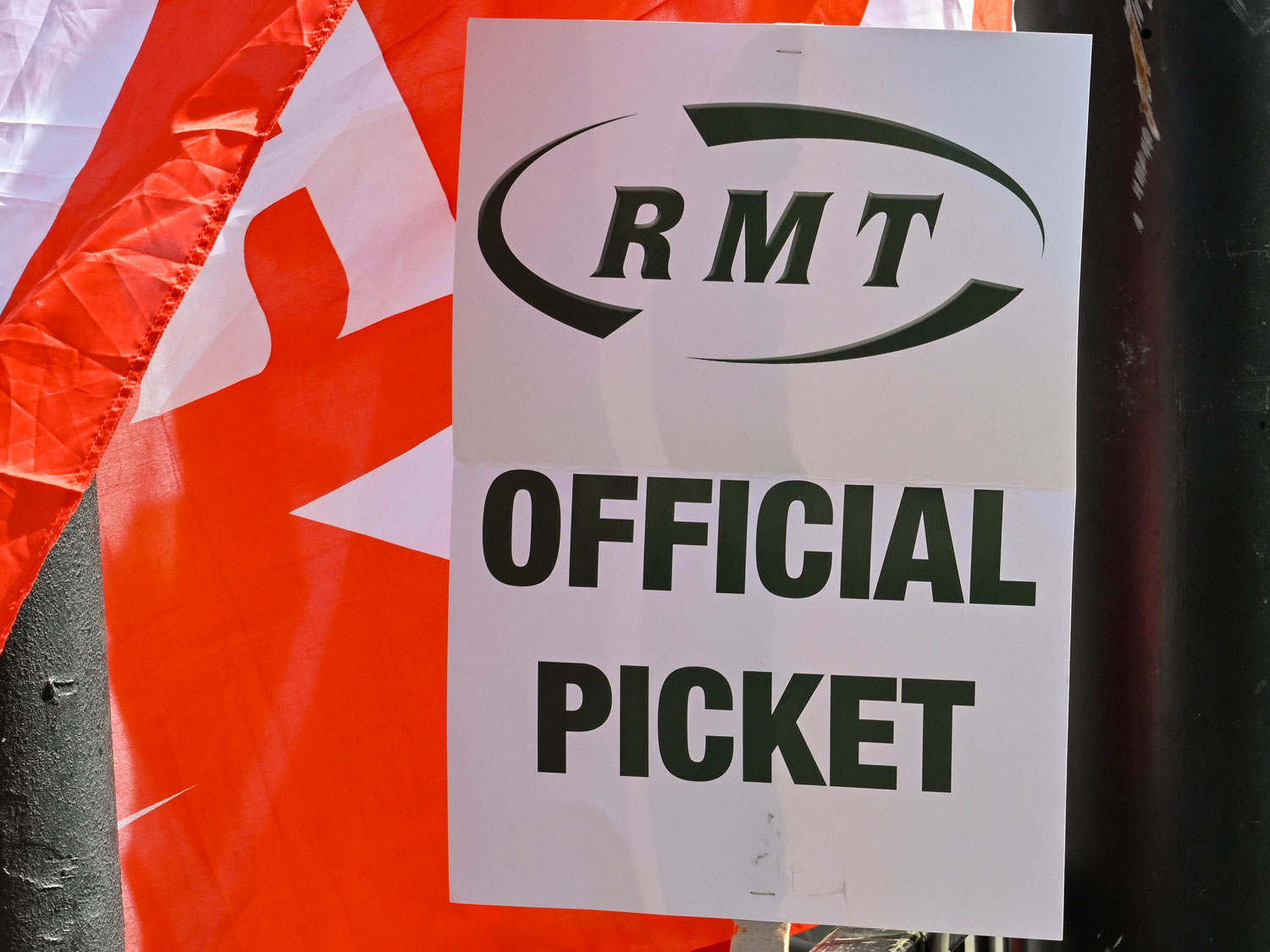
After last Wednesday’s rail-worker strikes, train drivers will also strike at nine rail companies on the 13th August, while members of the RMT are planning strikes on the 18th and 20th August alongside members of the TSSA at Avanti West Coast.

More coordinated action like this is likely, to keep protests in the public eye for longer, but mass politicised stoppages are unlikely, as each strike needs to be based on a specific dispute with an employer to be legal.

The prospect of Felixstowe stoppages follow similar walkouts at Antwerp and major German ports including Hamburg, Bremerhaven and Wilhelmshaven, with unions now agreeing that there will be no further strikes before late August, under a deal which calls for three further dates for negotiations up to the 26th August.

On the air mode, Lufthansa had to cancel 1,000s of flights last week week and cargo operations were affected in Germany, due to strike action that impacted the Frankfurt and Munich hubs. 

Consignments booked to be transported during the strike period as belly cargo had to be rebooked, but no further strikes are planned, as talks between the airline and union were scheduled to resume yesterday and today.

In a separate dispute, members of Germany's pilot union Vereinigung Cockpit (VC) voted overwhelmingly on Sunday in favour of industrial action, paving the way for additional strike action at Lufthansa.

We flex cargo volumes through a variety of UK and continental ports and airports, to take advantage of rate fluctuations, port pairing benefits and to avoid delays at congested ports.

To learn how we  work around disruption and port congestion, please get in touch with our sea freight director, Andy Smith, who can advise on our preparation ahead of any potential strike at Felixstowe.

US winter storm

Protecting supply chains from extreme weather events

With wildfires across southern Europe and the UK experiencing it’s hottest ever heatwave - with freight trains cancelled and the port of Felixstowe putting their gritters out, to overcome melting roads - we review research from the Supply Chain Management Center at the University of Maryland on supply chains’ vulnerability to climate risk.

A study of 12,000 pharmaceutical, automotive and tech companies across the US, China and Taiwan found that just 11% are fully prepared for climate-related disruption, even though 49% in the US had experienced an increase in climate volatility and 93% in China and Taiwan.

The research, conducted over several decades, found 80% of sites in the US had no plans or alternative sites available to take over operations quickly in the event of disruption, and just under half of all sites in China and Taiwan were similarly unprepared, with only 11% of all sites in the three countries fully prepared for climate related disruptions.

And only the top 30% of those sites could shift production to an alternative site in 10 weeks or less. In addition, they had no formal business continuity plans.

The study recommended specific steps firms should take to bolster supply chain resilience to climate and other risks:

  1. Map the supply chain
    The first step is to identify direct and indirect suppliers, because 50% of disruptions typically occur at the tier two supplier level. In most cases there is good visibility over critical vendor processes. It is very common for regional manufacturers to share a limited pool of sub suppliers, so while they may seem very diversified and resilient, they’re reliant on the same suppliers, which is why 50% of disruptions stem from tier two and below.
  2. Assess risk
    Once the vital links in the chain have been identified, the next step is to examine these sites’ vulnerabilities. This includes climate, natural disasters, local economic conditions, geopolitical risks, energy access, availability of labour and natural resources. Rank the revenue impact of each supplier, because that will prioritise where to invest resource to improve resiliency.
  3. Manage risks upstream
    Business continuity plans should proactively manage supplier networks so businesses can divert to alternative sources faster. MVT, our secure cloud-based workflow solution connects shippers to their suppliers and distribution networks, providing the visibility and control that makes it simple to switch to new suppliers.
  4. Simulate supply chain impacts
    Buyers should analyse and compare different supply network setups and sources in order to manage risk more effectively, observing climate impacts across a variety of configurations.
  5. Collaborate with suppliers
    Suppliers are vulnerable to disruption, not just from climate risk but from regulatory and customs bodies. In order to ensure vital suppliers are compliant and not stuck at the border, companies can incorporate business continuity planning into contracts. These could include backup plans, alternate production sites, and agreed-upon recovery timeframes. Collaborating with suppliers to develop these will also help businesses understand their vulnerabilities in the event of disruption.
  6. Integrate tech systems
    Connecting systems enhances the visibility and flow of orders and provides supply chain insights on a single platform. Data can be used to enhance forecasting and identify threats and opportunities in the supply chain, to increase risk mitigation. Additional sources of data, can be integrated to increase climate and disruption monitoring. Climate monitoring and predictive tools can allow for decades of data to be put to use in specific sites and locations, allowing users to understand essential vulnerabilities and risks.

However it is looking more and more likely that extreme weather events, including high temperatures, flooding caused by rain and storms, high winds and hurricanes/typhoons are a permanent feature, even if the worlds governments were to reach net zero in the foreseeable future. We will have to learn and adjust supply chains and logistics platforms to take into consideration the consequences of these occurrences of extreme weather, for many decades to come.

We work with our customers to improve supply chain resilience in key areas:

Understanding – With a thorough understanding of our customers’ requirements and objectives we create supply chain solutions that draw on the best options available in the current market, to meet their needs.

Visibility – Our cloud-based supply chain management platform, MVT, links new participants and events to provide visibility and control down to individual SKU level.

Flexibility – It is simple to divert supply lines, adding and monitoring new vendors, product flows and outbound order data, from any location.

Contingency – MVT’s exception alerts and rules-based solutions, correct operational non-conformities, without human intervention, or alert users to issues outside set-parameters for corrective action.

For specific information, or to discuss how our technology could support your supply chain, please contact Simon George our Technical Solutions Director or Elliot Carlile.