Truck in Switzerland

Take your customs declarations to a whole new level

Metro provide customs clearance services at all UK airports and ports of arrival and departure, including inland border points, with import and export entry processes completed within two hours.

Simply provide us with your commercial invoice, packing list and any other supporting documents and we will file your customs declarations directly with customs, using our HMRC approved CuDoS software.

The Metro Customs Document operating System (CuDoS) deploys the latest artificial intelligence (AI), machine learning (ML) and automation capabilities to optimise data capture and accelerate customs declaration processes, while reducing costs and increasing handling capacity by 25%.

Our AI and ML engines eliminate manual data entry and human errors, and because CuDoS ‘learns’ your data, it becomes smarter and accelerates tasks, for even greater efficiencies. 

CuDoS offers two hour turnaround times, from customer instruction through to document delivery, with 96% of declarations processed and submitted to HMRC within 30 minutes, and all at a market-leading 99% processing accuracy.

Metro’s customs experts have many years detailed knowledge in import and export trade compliance, rules of origin, classification codes and tax calculations.

With Metro’s CuDoS there’s no need for lengthy email chains and chasing phone calls, with document management, distribution and repository capability, providing audit trails of document movements and data-based insights, with comprehensive reports and analytics.

And while CuDoS provides 24/7 access to process and track transit, and customs processing, our customs team are available - for that personal touch - from 07:00 to 19:00 weekdays and with weekend support.

Customs Document operating System (CuDoS)
AI, ML and automation driven CuDoS optimises data driven declaration for speed, accuracy and compliance
20% reduction in headline costs and 25% increase in volumes
SLA of 98% on two hour turnaround times, from instruction to document delivery
96% of declarations processed and submitted to HMRC within 30 minutes
99% processing accuracy
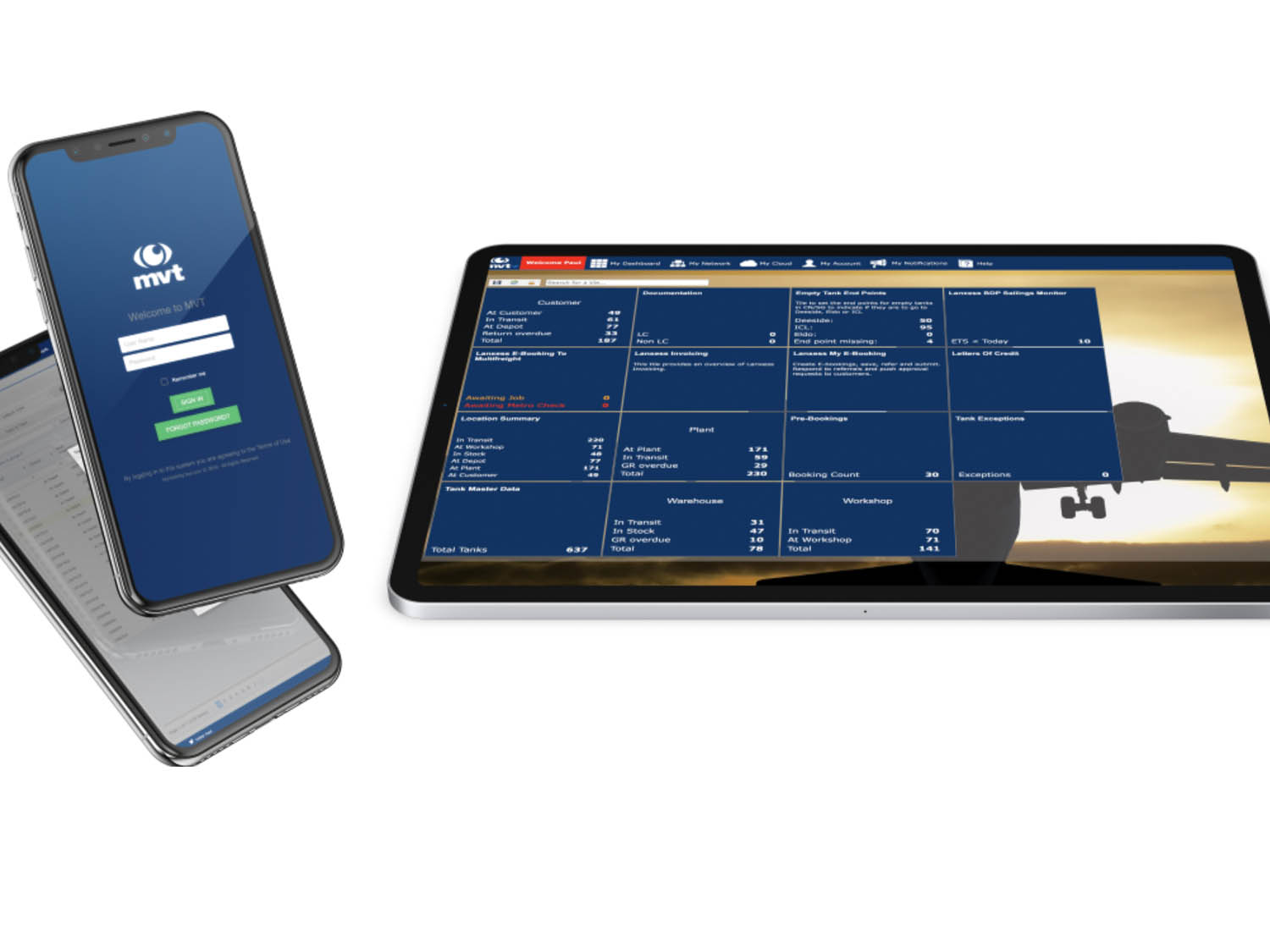
Dashboard view of customs activities, tracking, and reports
Customs badges across all UK ports and airports

Imports
RoRo, container and regional ports covered
All UK airports covered
Compatible with Simplified Customs Declaration Procedures (SCDP) and special customs regimes

Exports
RoRo, container and regional ports covered
All UK airports covered
Exit Summary Declaration application
Goods Vehicle Movement Service (GVMS)
Transit documents
ATA Carnet

Metro are at the forefront of automated customs brokerage solutions, simplifying and automating customs declarations for importers and exporters, with our CuDoS declaration platform and dedicated team of customs experts ready to support businesses of all types and sizes.

CuDoS simplifies and reduces the cost of trade, creating efficiencies and ensuring customs compliance by removing human errors.

To learn how we can simplify and automate customs declarations for your businesses, please EMAIL Andy Fitchett to review the options.

digital docs

Royal assent for Electronic Trade Documents Bill

Exactly two weeks ago the Electronic Trade Documents Act 2023 (The Act) received Royal Assent from King Charles III and will come into effect on the 20th September 2023. It sets out the basis upon which trade documents can exist and be dealt with in electronic form, such that an electronic trade document has the same effect as an equivalent paper trade document.

The Act paves the way for a significant shift in international trade. It states that a person may possess, endorse and part with possession of an electronic trade document, and anything done in relation to an electronic trade document has the same effect in relation to the document as it would have in relation to an equivalent paper trade document.

The International Chamber of Commerce has estimated that digitalising trade documents could generate £25 billion in new economic growth by 2024, and free up £224 billion in efficiency savings.

Prior to the Act, under English law it was not possible to possess electronic trade documents and therefore key English law principles in relation to documentary intangibles (such as bills of exchange) could not be applied to electronic forms of those documents.

The Act also amends the Bills of Exchange Act 1882 and the Carriage of Goods by Sea Act 1992 to remove certain incompatible provisions and means that businesses can now exchange trade documents electronically, such as bills of exchange, bills of lading, waybills, and insurance certificates.

The Act speeds up trade transactions and removes the need for paper documents in many cases. It also addresses transferability issues by permitting the legal concept of ‘possession’ to apply to an electronic document. 

The transfer of documents of title, which can take days, could now happen in moments, but the UK is the first G7 country to pass this capability into law, so the government must now take the lead in building the systems and getting the digital economy agreements in place with the rest of the world. 

The United States and Germany, have legislation enabling the use of most transferable documents already in place, while France is not far behind and Japan is exploring digital bills of lading and already possesses laws for digital promissory notes.

The UK’s move is likely to encourage similar shifts elsewhere. Already, there is talk of comparable bills in other jurisdictions, which may act as a catalyst, prompting a domino effect in other countries. 

The Act does not outline specific requirements for an electronic trade document system, which allows for the development of industry standards for such systems, such as the Digital Container Shipping Association (DCSA)’s e-bill of lading, the ICC’s Digital Standards Initiative (DSI), and the Future International Trade (“FIT”) Alliance. 

The Act will be transformative to trade and trade finance processes, but in the short-term users of trade documents and finance providers will need to deploy "reliable systems”, get comfortable with the risks associated with them and prepare for governments in other key jurisdictions to adopt similar legislation. 

Metro is leading the industry in developing the technologies and platforms that integrate with critical trade documents, including electronic bills of lading (eBL).

We have a seat at the UN/CEFACT forum and are members of the bodies that agree the standards and frameworks for standardised industry e-bill of lading and critical documents.

Please EMAIL Andrew Smith, CCO, now for further Information on our digital capability and how this can benefit your own continued global trade growth ambitions.

solar panels

Survey confirms Metro’s strategy on environment

A survey by the British International Freight Association (BIFA) confirms that freight forwarders are coming under increasing pressure from customers to show evidence of decarbonisation, while those same customers need to get ready for carbon emission audits now.

The BIFA survey found that legislation compelling change in logistics decarbonisation will be a primary driver for respondents, with nearly a third citing client pressure as the leading motivator.

Results show 69% of respondents consider calculating emissions is part of their daily activities, yet 22% had assigned budgets of under £1,000 for green initiatives within their organisation. 

The conclusion is that there is growing awareness of environmental issues among the BIFA membership and, to some extent, a growing awareness of the need to measure carbon emissions and provide that information to clients.

It is also clear that it will be challenging to determine how they will use this data, and what they can actually do to reduce their carbon emissions. The general consensus is that significant changes will be required by forwarders, but what these will be are not clear at the moment.

The BIFA survey highlights just how far ahead Metro’s environmental strategy and actions are!

In consultation with customers Metro began development of our MVT ECO module in 2021. 

Today Metro is measuring and monitoring the emissions of every shipment, by every mode, for all of our customers, with offsetting alternatives, so they can work towards carbon neutrality in their global supply chain. 

As of 1st July 2023, MVT Eco has reported on 86,766 shipments, with a total CO2 equivalent of 279,864.58 tonnes.

Metro has committed to environmental transparency, using international sustainability reporting standards and through ISO 14001 accreditation, Metro has been fully offsetting emissions through verified carbon offsets.

Metro has been certified Carbon Neutral for two years.

The Corporate Sustainability Reporting Directive (CSRD) that becomes effective from 2024 will extend a company’s obligation to report on sustainability issues, to stimulate the EU’s transition to a sustainable economy.

However, it is likely to cause headaches for companies needing to report on Scope 3 emissions, which are outside their immediate control and brings reporting on emissions to the same level as financial auditing.

Scope 1 emissions are produced directly by companies, while Scope 2 is mainly from energy that is bought in and Scope 3 accounts for all other indirect emissions, the majority of which are in the supply chain. 

Scope 3 emissions account for the most – typically 10 times those of Scope 1 and 2 combined – and they are the hardest to measure, requiring a reliable, automated way to collect data and analyse it against targets.

UK companies operating in the EU will need to report Scope 3 emissions in CSRD and while reporting is currently voluntary in the UK, it will inevitably become mandatory.

MVT Eco uses reporting methodology that is in conformance with the Global Logistics Emissions Council (GLEC) and incorporates 30 pre-built charts and downloadable statements, to simplify Scope 3 reporting compliance for customers in the EU and UK.

The MVT ECO module is available free-of-charge to customers on their MVT dashboard. To request a demo or discuss your requirements, please EMAIL Simon George.

ECO globe

Sustainability is good business

As the effects of climate change intensify, the pressure on the food sector will increase over the coming decades, which is encapsulated by the FDF’s environmental ambition in creating a more sustainable food system. 

Supply chain issues, labour shortages, threats to energy security and rising inflation have added a new set of challenges for the food and drink industry over the last 12 months, however despite these obstacles, FDF members remain focused on their ambition to reach Net Zero by 2040 – a decade earlier than government targets.

The oft-quoted Forbes survey found that 82% of consumers want brands to practice sustainability and while some cracks have crept into the sustainability narrative as the cost of living crisis bites, the global pandemic and recent environmental disasters have maintained demand for sustainable practices and products.

Sustainability is good for business; it builds brand value, meets consumer expectations, attracts talent and creates new opportunities, but only if you communicate your efforts credibly, and avoid being perceived as greenwashing.

According to NielsenIQ survey data, 46% of consumers still expect brands to take the lead on bringing about sustainable change, which means that brands can no longer greenwash themselves. 

Packaging and last-mile delivery are primary sources of emissions with 53% of US and UK consumers wanting brands to produce less packaging and an average of 25% willing to pay a surcharge for eco-friendly delivery.

Manufacturers, producers, brands and retailers are already rethinking their practices, to find sustainable solutions, including the adoption of eco-friendly packaging, more climate-friendly shipping options, optimised waste management and completely eliminating packaging waste.

Despite today’s economic uncertainty, consumers are still open to sustainable products if they are affordable and offer value, which is why effective implementation and communication of these initiatives is critical.

Metro can help shippers switch to sustainable packaging for their products, by sourcing sustainable and ecological packaging materials, while our freight centres use renewable materials, which reduce packaging waste to a minimum.

Through our MVT ECO initiative, Metro is measuring and monitoring the emissions of every shipment, by every mode, for all of our customers, with offsetting alternatives, so they can work towards carbon neutrality in their global supply chain. 

CO2 emissions caused by transport are calculated according to EN 16258 to provide data and reporting that complies with the most demanding frameworks and methodologies. 

Using our latest generation MVT Eco module, we develop intelligent supply chain solutions. With accurate and representative data, that are respectful of the environment, we create low-carbon multi-modal solutions that blend air, road, sea, inland waterways and rail, together with NGV and electric vehicles.

The MVT ECO module is available free-of-charge to customers on their MVT dashboard. To request a demo or discuss your requirements, please EMAIL Simon George.