Trade after Brexit

Logistics association highlight economic cost of No Deal Brexit

Logistics UK, the revamped Freight Transport Association (FTA), has warned that a No-Deal Brexit could have a significant effect on the price of all imported goods and could drive inflation up as a result.

“Everyday household items we import will become more expensive under World Trade Organisation tariffs,” writes David Wells, the association’s CEO, “some by 30% or more.  This will make the household shopping basket much more expensive, particularly in the early part of 2021 when we rely on imports for much of our fresh food. 

“The actual cost of moving goods will also increase,” he continues, “if new vehicles, parts and tyres are also subject to tariffs. This is more than ‘turbulence’, as suggested by Mr Gove recently and logistics businesses, operating on 2% margins, cannot afford to take on these costs.”

Another concern for logistics operators will be obtaining access to the EU market if the talks remain unresolved, as without a deal, UK hauliers will also be restricted by the number of lorry access permits available to enter the EU. “The permit quota available to UK operators will fall short by a factor of four, putting businesses at risk right across the country. We are urging government to keep pressing for a deal with Brussels, to protect not only our industry but the economy as a whole.” 

Elizabeth de Jong, policy director at Logistics UK, added: “Logistics UK has been working closely with the government for some time to highlight the issues which could affect the smooth passage of goods through the supply chain at the the end of the transition period.  

“Much has been achieved but there is still much to be done if disruption is to be avoided from 1st January 2021, with detail still required in order for logistics operators to brief and train staff, and adopt new processes for declarations, tariff calculation and payments. As always, we stand ready to provide all support necessary to make Brexit a success but need the government to provide us with the information we require, in detail and at pace.”

With COVID, Brexit, new technology and other disruptive forces driving change in the way goods move across borders and through the supply chain, efficient supply chains have never been more important.

Metro’s ‘Brexit Ready’ web portal has been designed to prepare your business for the 1st January 2021.

For further information on Metro’s brokerage services and automated solutions, please contact Grant Liddell or Chris Carlile who are leading our 2021 EU withdrawal Task Team.
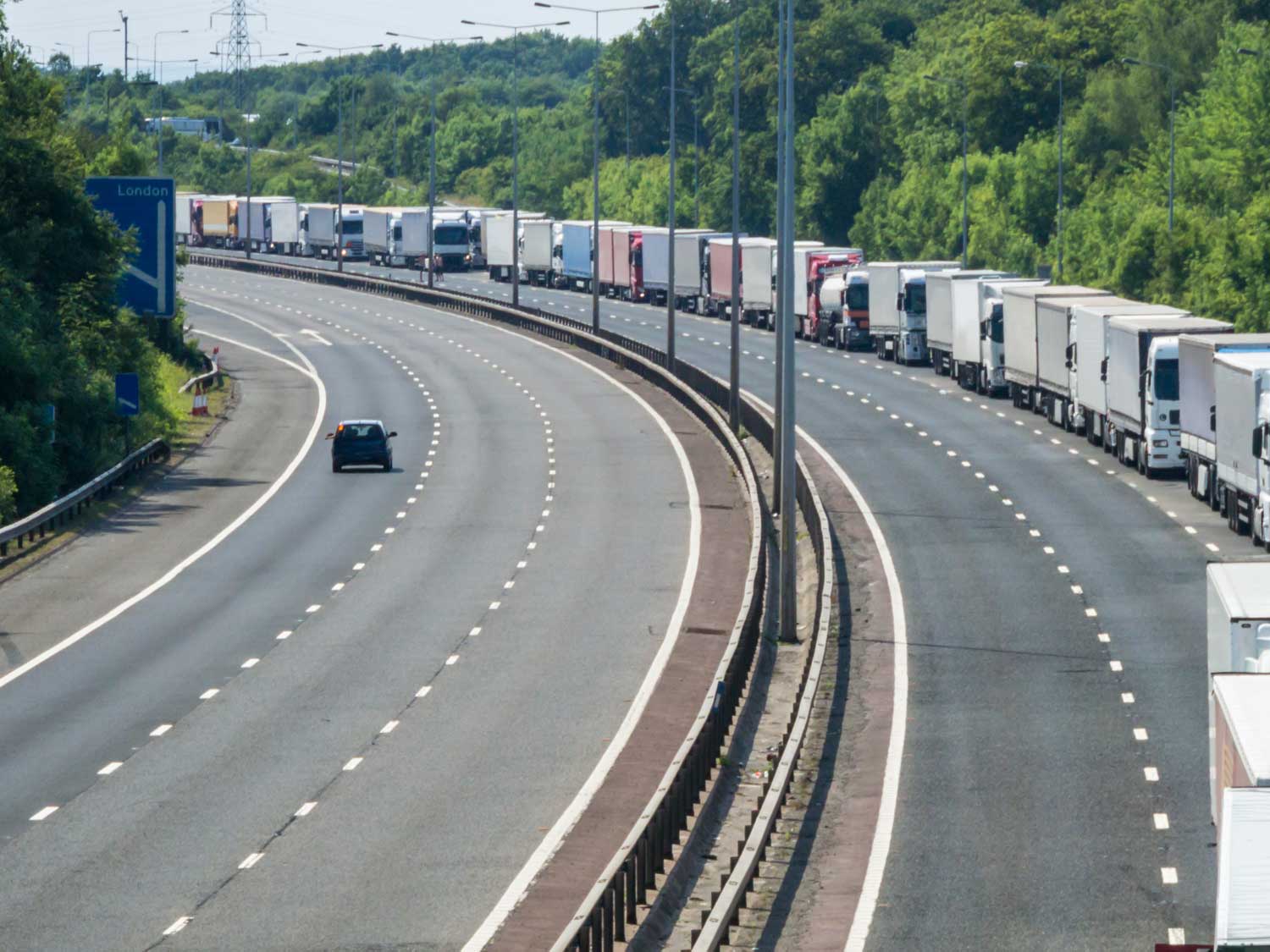

Brexit customs chaos looms

Experts ‘fear’ for critical Brexit systems

While government minister Michael Gove fielded questions on Brexit IT system release dates from a parliamentary committee, name changes and uncertainty about systems preparedness is making the logistics industry nervous.

Mr Gove told the Future Relationship with the EU parliamentary select committee he “hoped” the Goods Vehicle Movement Service (GVMS) will be ready by the 4th December and the smart freight system “December 2020”, noting that both systems were being “refined”.

When asked how this differed from being tested, he simply stated that refinement and testing were “part of the same process”.

Further adding to the confusion surrounding post-Brexit customs preparations, the government last week announced a name change to its export ‘smart freight’ system, which is now called the “Check a Heavy Goods Vehicle is Ready to Cross the Border service”.

Clarifying Mr Gove’s position a government spokesperson told The Loadstar: “We are already testing the ‘Check an HGV is Ready to Cross the Border’ and GVMS services with industry. Both systems will go live in December.”

One source told The Loadstar the new dates conflicted with industry understanding that the systems would not be ready until next year, while another said that though he expected systems to be released in December, he questioned whether there was sufficient training time.

An invitation via BIFA to participate in private beta testing prompted would be participants to assume that development work on "Check an HGV is ready to cross the border” was still at an early stage. In fact a working demo is live and available for testing by hauliers and forwarders. 

It’s quick and simple to get your ‘Kent Access permit’ (KAP), taking us just over a minute, to complete the process. Although, compiling the nine sets of highlighted documents, that might accompany the driver, would take a lot longer to complete.

GVMS will be used for goods coming into the UK and many believe that more government effort would be required to inform foreign operators of how it works.

While HMRC is doing “some” GVMS roadshows, it is critical that the system’s operation and purpose is clearly communicated, as an error in the start of a shipment’s journey, like incorrect vehicle registration, could see it stranded on the other side of the Channel.

The British International Freight Association added to the clamour of calls for the government to step up its pre-Brexit preparations, saying: “BIFA members are looking for assurance from government that the new IT and other systems being introduced will actually work.”

Metro work closely with HMRC, BIFA and The Association of Freight Software Suppliers (AFSS) to follow the status and influence the development of GVMS and other HMRC systems. 

We have developed a suite of bespoke, generic and automated solutions to protect your EU trade from the 1st January 2021. This includes our CuDoS (Customs Documentation Services) platform automating and digitalising customs submissions in the new European environment. 

For further information contact our post-Brexit Task Team and speak with Andrew White or Jade Barrow.

Trump sign

Brexit politics round-up 5th November

The US Presidential race could change Brexit dynamics, with Mr Trump commenting favourably on Britain's decision to leave the EU, while Mr Biden, who has Irish heritage, has indicated he would not favour any action that threatened the Good Friday agreement.

As the latest round of EU/UK trade talks finish up in Brussels without any agreements being reached, there is hope that some progress has been made on the fishing issue, but a final decision on the detail won't be made before a trade deal is struck.

It has been two weeks since talks resumed (after coming close to a breakdown) and they could run for another fortnight, beginning with further discussions in London this weekend. 

Mr Barnier will address the European parliament in Brussels today with an update and an anticipated recommendation to continue talks.

Brussels on Tuesday also confirmed that Britain had failed to reply to a letter from the commission last month warning that the government’s internal market bill would violate last year’s Brexit treaty, leaving Brussels to “consider next steps”.

As businesses in Northern Ireland are warned that there will be 30m customs declarations a year on GB-NI trade from the 1st January, a live poll by Lloyds List found that 1/3 of UK businesses are still not ready for the supply chain impact of the 1st January 2021.

Whether there's a free trade agreement or not, there's going to be a requirement for import and export customs declarations and for a lot of companies, particularly those that have only traded with the  EU, this is going to be particularly challenging. 

Even if they wanted to, there isn’t time to prepare to do it themselves, so they need to reach out to a Customs broker and with the UK still short 50,000 of these experts, they may well have left that too late as well.

An EU trade deal will not change the need for customs entries on export and import of freight and other administrative requirements may also be required, as the logistics landscape with the EU changes dramatically. 

Metro has bespoke, generic and automated solutions to protect your EU trade from the 1st January 2021. For further information contact our post-Brexit Task Team and speak with Andrew White or Jade Barrow.

Parliament blur

Brexit politics round-up 29th October

While Boris Johnson may be feeling some justification for his recent brinkmanship, with the trade talks apparently moving forward again, he is facing Brexit bill defeat (and possibly US displeasure) at what is likely to be a very pivotal moment.

The Prime Minister’s plan to flout international law over Brexit is set to be blocked by the House of Lords next month and is also likely to strain relations with Joe Biden should he win next week’s US presidential election.

There is little doubt that the government will be defeated in the upper house, but with Boris’ overwhelming majority, it simply delays the inevitable, should Boris be determined to push his bill through.

Mr Biden has warned that the proposed UK internal market bill would undermine the Northern Ireland peace process and that he would never sign a trade deal with the UK unless key clauses in the bill were removed. 

Boris is in a pickle. If he commits his government to the controversial clauses and forces the bill through, he’s risking a row with Mr Biden (should he win) as well as with Brussels, who have already started legal proceedings against the UK.

“The extended exit and transition process is impacting public opinion with the latest YouGov and Times poll showing that just 38% still think Brexit was the right decision while 50% think it was wrong”

Meanwhile Michael Gove met with UK retailers yesterday to discuss potential transport problems and the group building post-Brexit freight software – supposed to help companies submit paperwork digitally – said it’s unlikely to be ready for the 1st January. 

The best result for all is a successful outcome to the trade talks. 

Ireland’s foreign minister Simon Coveney has claimed that a Brexit trade deal is now likely in the next two weeks, but warned that major trade disruption would be the “new reality” after the 1st January, even if a UK-EU deal is struck.

Carolyn Fairbairn, director general of the CBI, said of the Brexit trade deal “I think we will get a deal. The remaining issues look soluble.”

A deal would also make customs procedures easier, and would give the UK a base from which to build future agreements that would boost key sectors. “A deal is enormously better than no deal.”

Despite the short-term challenges, Fairbairn said the UK would make a success of Brexit. “Business will do everything possible to make the best of it. There will be areas to explore. There will be areas where it will be good to align with the EU but when it comes to AI and the industries of the future we could find new ways to shape the regulatory environment.”