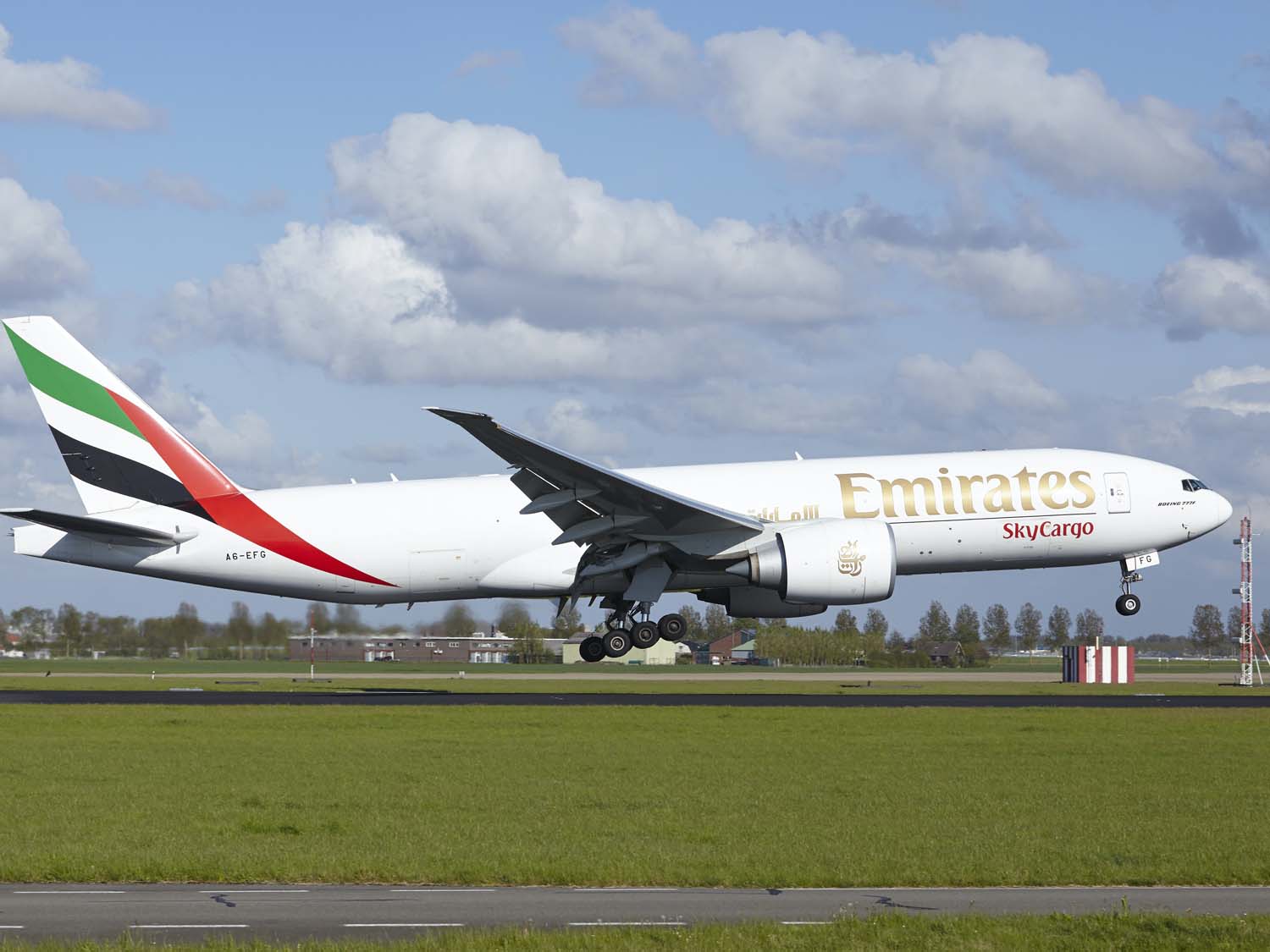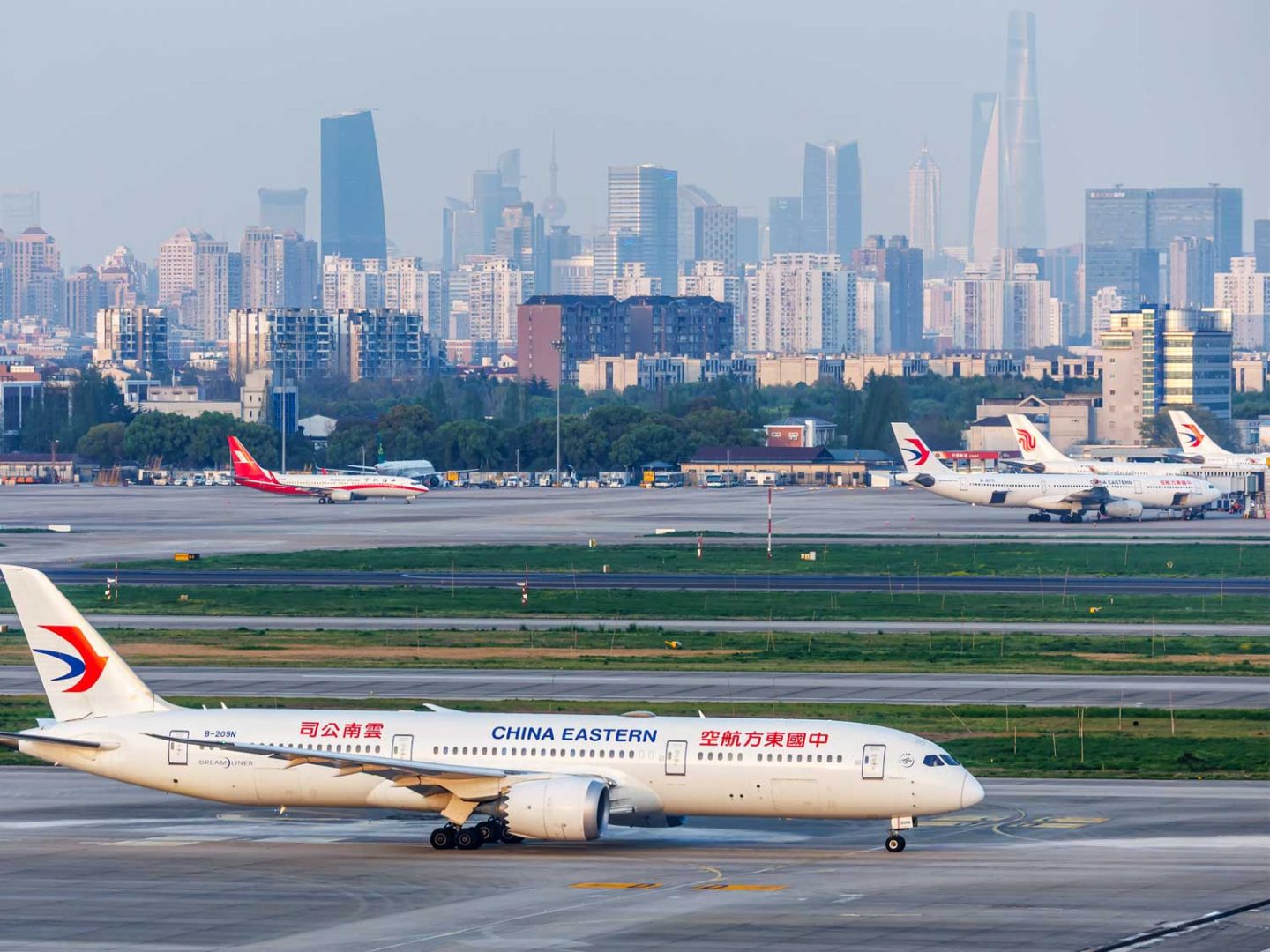
KLM Boeing 787 10 Dreamliner

Air freight demand recovery still a way off

Weak summer demand saw air freight chargeable weight move down 1% and while the fall was minor, it is the fourth consecutive month of falls, which suggests that we may require another few quarters before we see more demand pick up on a global level.

According to the latest market analysis from Xeneta, shippers continue to benefit from the soft air freight market, but rising jet fuel prices could be a concern in an already contracted market, with prices for US Gulf Coast jet fuel jumping 21% month-over-month.

August saw global air cargo capacity rise +7% year-on-year, while global dynamic load factors, based on volume and weight perspectives of cargo flown and capacity available, climbed 1% over the previous month to 56%. 

However, it is worth noting that the August global load factor continued to fall year-on-year, down 3% from last year’s level, due to soft demand and the capacity surge, driven by the summer’s passenger services.

The data from Xeneta dampens some industry reports of a slight spike in demand in August, and with it hopes of a rise in volumes going into the final quarter.

Like July, August was very quiet and we see no meaningful signals of any kind of peak arising this year and while there might be some early peak season charter requests in the market, they are not backed up any real demand and there are doubts about how serious they are.

The market does seem to have levelled out, but there is still a lot of uncertainty, and not just for air freight. There was also no peak for the ocean market, which typically precedes the air freight market by a couple of months, with blank sailings actually being scheduled ahead of the Golden Week period.

Despite the lacklustre situation we have seen some rates creeping up out of China, mainly due to eCommerce demand and it is likely that upward pressure will increase in the second half of October as capacity is taken out of the market, but the signals for the rest of the year are not good, without improvement in the macroeconomic outlook situation.

Of 10 major trade lanes assessed in the past month, only China-United States and Southeast Asia-United States recorded growth, with air cargo spot rates up 3% and 4% respectively on these corridors. This is attributed to a more resilient US economy and the delayed recovery of US-China passenger bellyhold capacity, which is growing at a much slower pace than Europe-China.

Even so, due to geopolitical capacity shortages, spot rates ex Northeast Asia to Middle East & Central Asia, Northeast Asia to Europe, China to the US and China to Europe remained highly elevated, and are still 55% above their pre-pandemic levels.

Going into the usually critical autumn and winter period, we will be looking to secure longer carrier commitments and rates that reflect the reality of today’s market and expectations moving into 2024.

For valuable, special and time-sensitive cargoes there has never been a better time to use air freight, with extremely competitive rates and really interesting service and route combinations.

We have solutions for every critical shipment. EMAIL Elliot Carlile for insights, advice, prices and solutions.
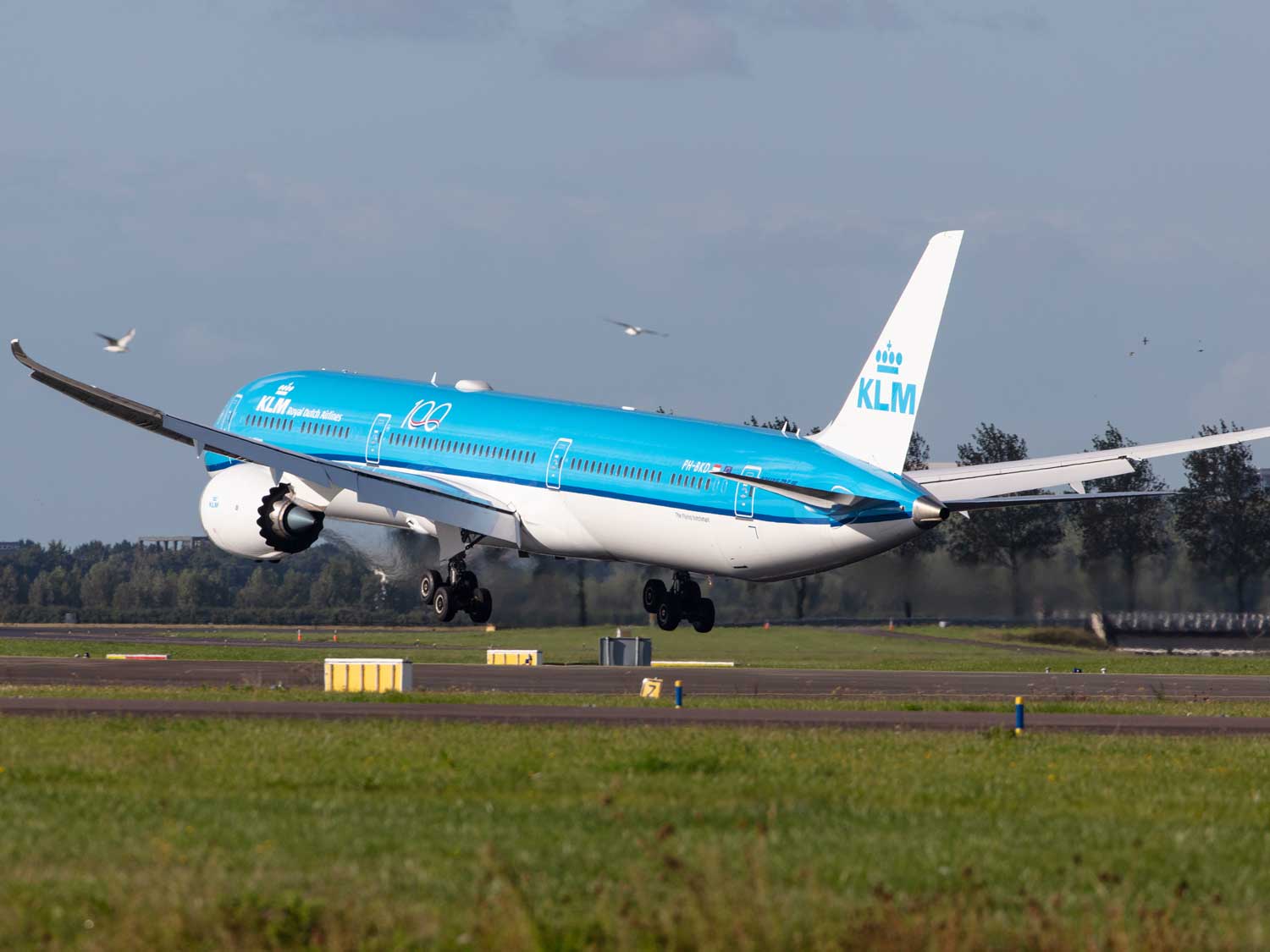
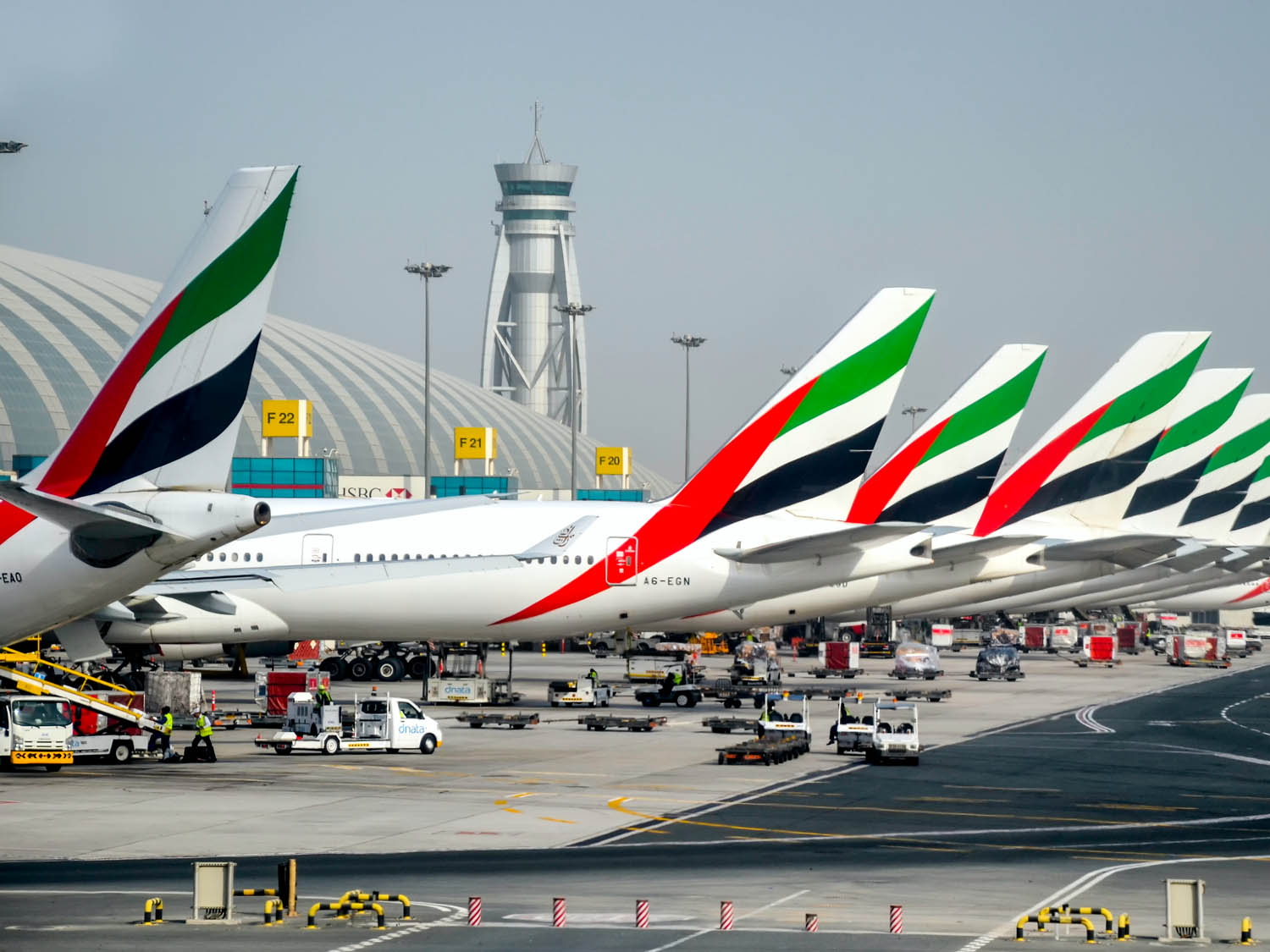
Emirates Dubai

Air freight’s troubles continue

July saw global air cargo demand fall by 3.4% and capacity grow +7% compared to a year ago, as airlines’ summer schedules stepped up to meet the holiday season’s heightened passenger traffic. 

Last month’s global average dynamic load factor, which measures the volume and weight perspectives of cargo flown and capacity available, was at 55%, which was on par with the previous month, but was -3% down on the level of a year ago.

Despite the greater capacity availability another month of falling demand saw volumes drop -2% on June, with the general global airfreight spot rate index falling for the fourth consecutive month.

July rarely provides any performance surprises in the global air cargo market, but carriers will be concerned by the month-on-month declines in average rates, and the accelerating pace of these falls since the start of the year. 

The global air cargo spot rate bottomed out in the second week of July, while in the final week, it ticked up 3%, possibly reflecting an easing decline in cargo volumes and slower paced growth in capacity versus previous months.

The recent rise in jet fuel prices might also have contributed to the increase, having already been seen in some rate revisions, but it is likely it will not provide any meaningful impact on freight rates, as demand and supply dynamics for the general air freight market remain unchanged. 

Northeast Asia (including China) trade lanes registered the biggest rate declines compared to last year. Both China to the US and US to China airfreight spot rates fell 60+% from a year ago with China to Europe and Europe to China falling significantly, but not by the same levels.

South America to the US and Europe to the Middle East and Central Asia registered the smallest rate declines of 19% and 27% respectively, compared to a year ago.

High yield cargo and commodities are contributing higher margins to carriers, despite a drop in volumes, which is compensating for the high competition in the general cargo market, where high competition means the spot rate (valid for up to one month) has fallen below the seasonal rate (valid for over one month) since May last year. 

Cargo requiring special handling continues to produce higher yields, with the spot rate above the seasonal rate since the onset of the pandemic.

For the remainder of this summer, the expectation is that airfreight volumes will remain muted. 

The latest manufacturing Purchasing Manager Index (PMI) from China ticked up to 49.3 in July from 49.0 in June, which indicates a slowdown in manufacturing for a fourth consecutive month, while its subindex for new export orders, a bellwether for air cargo demand, also dropped in July.

Going into the usually critical autumn and winter period, we will be looking to secure longer carrier commitments and rates which reflect the reality of today’s market amid expectations that the current environment could continue for the foreseeable future into 2024.

For valuable, special and time-sensitive cargoes there has never been a better time to use air freight, with extremely competitive rates and really interesting service and route combinations.

We have solutions for every critical shipment, please EMAIL Elliot Carlile for insights and advice.

Emirates increase service

More carriers select our Birmingham hub airport

We are pleased to see key carrier partners, Emirates, Qatar and Saudia commit more flights, with air freight capability, directly to our Birmingham Airport hub, from key Middle East and Asia origins.

Birmingham International Airport (BHX), has underlined again its critical importance as our air cargo hub and the global gateway of the Midlands, with three major Middle Eastern airlines forging new partnerships and enhancing the airport’s connectivity to the region.

On the 1st July, Emirates (EK) reintroduced its iconic A380 ‘superjumbo’ to Birmingham, bolstering capacity on its popular twice-daily Dubai service.

The next day, Saudia (SV), the flag carrier of Saudi Arabia, commenced thrice-weekly flights to and from Jeddah, with Qatar Airways (QR) returning to Birmingham Airport after a three-year absence on the 6th July, launching daily services to Doha.

Andy Street, the Mayor of the West Midlands, hailed the return of Qatar Airways, along with Emirates and Saudia’s expanded services, as a substantial economic boost for the region, which has the strongest foreign direct investment and job creation performance outside London and the Southeast.

Birmingham Airport plays a pivotal role in the economy of the West Midlands. In 2022, its economic contribution, measured by gross value added (GVA), stood at £1.5 billion, supporting 30,900 jobs directly and indirectly.

BHX forecasts annual customer numbers to reach 18 million by 2033, with a projected GVA of £2.1 billion and supporting 34,400 jobs.

The continued support of Qatar Airways, Emirates, and Saudia demonstrate the confidence of these global airlines in the region’s potential, the Birmingham gateway and the cargoes they carry for UK importers and exporters.

The scale and efficiency of the airport and cargo handling operations at Birmingham, together with with our long-standing strategic partnerships with these operators, enables us to process and collect cargo very quickly after aircraft arrival, avoiding the delays and congestion experienced in peak periods at other UK hubs.

Selecting Birmingham International, the UK’s fastest-growing airport, as our central air freight hub, was the natural choice for four key reasons: proximity to major clients and manufacturing regions; speed of first/final mile logistics; access to key carrier partners and growing services; and proximity 90% of the UK population within a few hours drive.

For further information on our air freight and BHX gateway solutions please EMAIL Elliot Carlile.

Picket

The shipper’s new normal

The rapidity of the collapse in air and sea freight rates has given carriers the same level of trauma and shock experienced by shippers when freight rates exploded in  2021 and while the turnabout in the market was anticipated, its intensity and extent is far greater than expected, with shippers very much back in the driver’s seat.

The pandemic triggered supply chain disruptions of the last few years were particularly profound and far outside anything we might expect and while we should not expect new challenges or disruptions to have anything like that impact again, there will always be competitive pressure in the market, that will create capacity issues and rate fluctuations.

Many commentators describe the return of ocean freight rates to pre-pandemic levels as a ‘return to normal’ but 2019, which is often taken as a reference year, was a bad year for shipping company results on East-West routes and carriers’ operating costs have increased by about 30%.

A real ‘return to normal’ would require a return to schedule reliability, normal sailing speeds and freight rates at sustainable levels, to support long-term planning.

None of these three conditions currently applies on the major trade lanes and therefore, it is, incorrect to talk about a return to normal, in these terms. 

And it is important to keep in mind that a normal freight market is not the same as a global shipping market with no changes or disruptions.

There will always be challenges and operational disruptions. 

In the United States, we may have avoided strike action on the US West Coast (subject to ratification), but labour negotiations in Vancouver have failed to avert an ILWU Canada strike, which began on the 1st July, with no end date announced and a drought on the Panama Canal has been impacting container vessels transiting to the US East Coast. 

Just as operational disruption will manifest anywhere, at any time, there is always a point in global supply chains that is being impacted by adverse weather conditions, such as storms or fog. 

It may not feel like it, but all things considered, the markets are much more normal and maybe this will be as good as it gets for the short-term.

It is because businesses need to thrive against this backdrop of a complex supply chain environment that our MVT platform provides end-to-end visibility, with purchase order management and transparency of inventory throughout the supply chain.

Synchronising inventory across all transport modes and locations, with accurate real-time dashboards and reports, MVT provides supply chain executives with the data they need to assess and react to operational challenges.

Please EMAIL our Chief Commercial Officer, Andy Smith, for ‘normal’ insights and intelligence.