Automotive market update: navigating an evolving industry landscape

Automotive market update: navigating an evolving industry landscape

The automotive industry is in a constant state of motion, moving 1.6 billion components every year to support the manufacturing of approximately 85 million cars worldwide.

With around 20,000 parts required per vehicle, the sheer scale of supply chain activity is immense, particularly for the 960 million components that must be imported via rail, road, sea, or air to reach production sites.

Metro’s Automotive Operational team plays a crucial role in keeping this complex system running, managing parts, accessories, and vehicles against stringent delivery KPIs to ensure timely, in-full deliveries, no matter the challenges. As global supply chains adapt, Metro’s expertise in overcoming obstacles helps to keep the automotive world moving.

Chinese EV Imports causing waves
European automakers are facing significant pressure from an influx of more affordable electric vehicles (EVs) from China. Chinese brands have quickly gained ground in Europe, rising from less than 1% market share in 2019 to an estimated 8% today. With forecasts suggesting that this figure could double by 2025, European automakers are now contending with vehicles priced as much as 20% lower than EU-made models. In response, the European Union has implemented additional tariffs on Chinese EVs, raising import duties by up to 45.3% after a high-profile trade investigation aimed at protecting the European market.

China has responded by advising its automakers to reduce investments in European countries that support the new tariffs. This escalating trade tension highlights the competition between Chinese and European manufacturers, especially as China’s surplus production capacity of 3 million EVs annually—double the total EU market—seeks new outlets following similar tariff impositions in the US. Germany’s Volkswagen, for example, plans to restructure its domestic operations, including shutting factories and reducing staff, in response to mounting cost pressures and competitive challenges posed by Chinese EVs.

Autonomous driving advances with electric
As the automotive sector continues its shift toward electric mobility, autonomous driving technology is expected to advance alongside it, with early implementation focused on well-defined urban areas. Inner-city environments, where infrastructure and controlled conditions better support this technology, will likely see the first deployments of automated driving. 

Projections estimate that widespread adoption of self-driving passenger vehicles in the UK could save 3,200 lives and prevent over 50,000 serious accidents by 2040, resulting in an economic boost worth £38 billion. Public openness to this technology is growing, with nearly a third of adults willing to try automated passenger services and even higher interest among Generation Z.

Metro’s automotive logistics

The automotive logistics team has had a busy month, handling over 150 cars transported via road, air, and sea, as well as shipping more than 500 containers of automotive components globally and managing around 30 full trailer loads of parts across Europe. 

When time is critical, Metro steps in to provide airfreight solutions for urgent deliveries, whether it’s a customer’s car for a deadline or a new vehicle heading to an event or press reveal. This month, Metro helped a client successfully re-import a car from China to the UK, overcoming delays caused by complex regulatory challenges. For automotive manufacturers, private collectors, and high-profile individuals, Metro ensures that vehicles arrive securely and on time, whatever the destination.

As the automotive industry adapts to new market conditions, from the rise of Chinese EV imports to the advancement of autonomous technology, Metro remains a dependable partner, supporting clients across every stage of the supply chain and helping them navigate the complexities of a fast-evolving global market.

If you have any questions or concerns about your Automotive supply chain, please EMAIL our Automotive team who are standing by to assist.

Bangkok and Dubai air cargo handling delays

Bangkok and Dubai air cargo handling delays

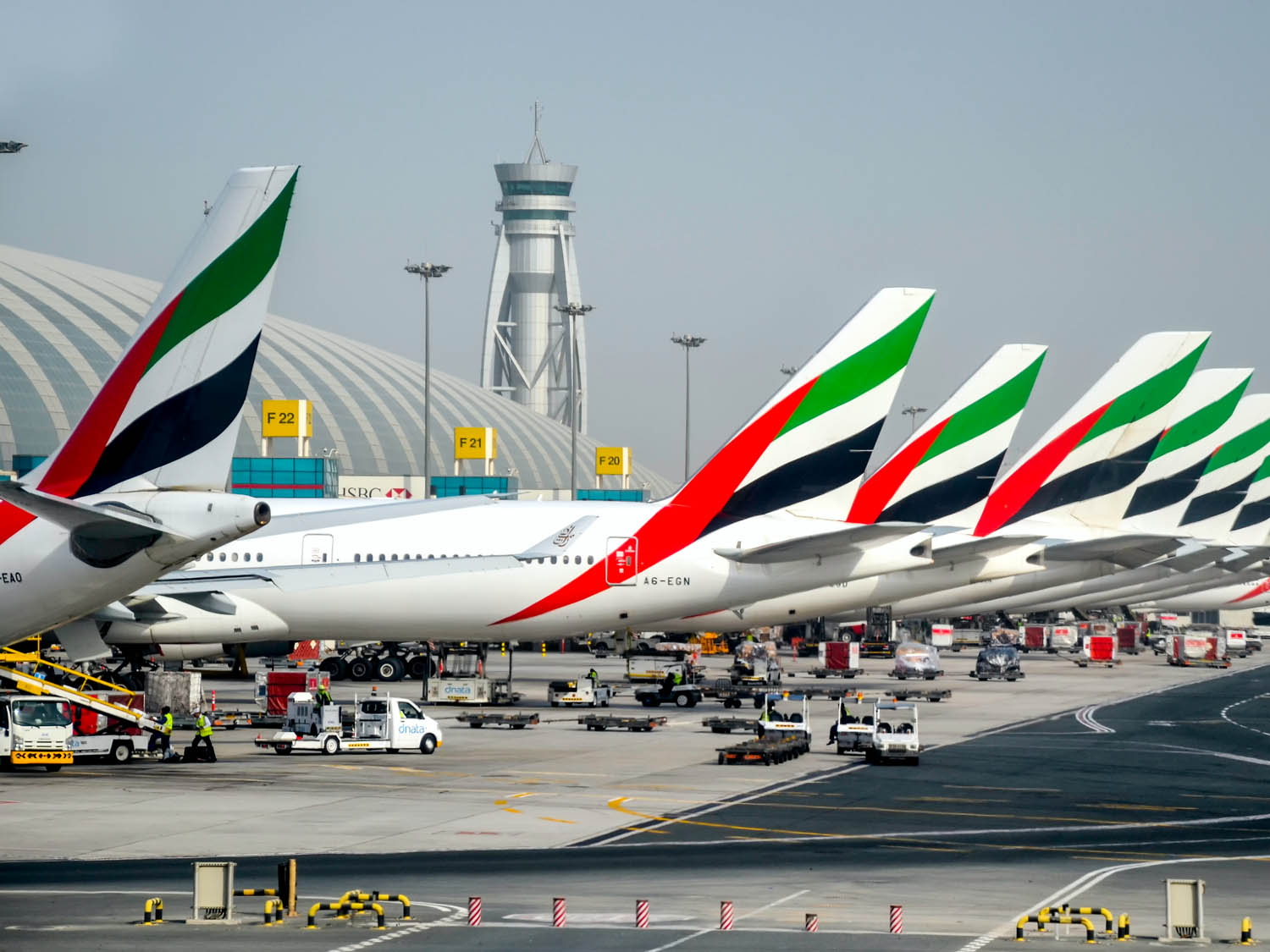
The ramping up of air cargo demand in Asia has led to ground handlers in Bangkok and Dubai announcing temporary embargoes on imports, with delays still being experienced. 

The unprecedented volumes of air cargo are largely due to modal shifts from sea to air and sea/air because of the Red Sea crisis and a higher than expected export surge ahead of Chinese New Year.

The surge in inbound Dubai cargo flows, that peaked last week, has resulted in a backlog of cargo for processing at the ground handlers, who suspended processing of imports of general cargo.

The big passenger airlines were particularly impacted by the embargo, including Qatar Airways who operate about 10 Dubai flights a day. 

Qatar also issued advisory notices of the temporary embargo at BKK, scheduled to last until the beginning of this week.

Etihad Cargo maintain that its Abu Dhabi hub has been unaffected, but they do have high volumes of inbound trucking into Dubai which has been impacted by the disruption.

No embargo has yet been issued by Etihad Cargo, as they are buffering and clearing cargo in Abu Dhabi for subsequent dispatch to Dubai.

It is clear that the traditional sea-air hubs, including Colombo and Singapore as well as Dubai have experienced massive congestion, and even in Bangkok and Doha, a similar situation is evident.

Colombo volumes are high with sea to air movements, but extra volumes are clearing through charter freighters and there is no serious congestion at the moment.

However, short-term rates have increased by almost a third and while we do not expect them to remain that elevated for long, they may stay strong as importers in Europe and the US use time-critical solutions to avoid empty shelves and stock-outs.

Bangkok ground handlers confirmed the surge in demand had created a backlog in their facilities and have waived storage charges during the embargo, saying they cannot charge storage if they are causing the storage issue. 

Incoming shipments were not being sorted a week ago as there was no storage space in the warehouse, with more cargo expected in the coming days.  

The temporary embargoes only apply to imported general cargo and not perishables, pharmaceuticals, dangerous goods or other types of specialised freight. 

For urgent, valuable and special shipments we have a range of air freight and sea/air solutions, with extremely competitive rate and service combinations, to meet every deadline and budget.

EMAIL Elliot Carlile, Operations Director, for insights, prices and advice.

Supporting the food, drink and automotive sectors

Supporting the food, drink and automotive sectors

Metro operate in a range of industry sectors and are active members of trade associations that represent our clients’ interests, providing free advice on freight, supply chain and logistics issues, together with access to special rates and expert insights on relevant topical issues.

For over 40 years Metro has been working with leading foodstuff and automotive brands, creating ambient and temperature-controlled supply chains for food products and solutions for inbound automotive product flows, together with aftermarket logistics, distributor support, finished vehicle transport and special projects.

The Food and Drink Federation (FDF) is the voice of the UK’s food and drink manufacturing industry, bringing together over 1,000 members with business, government and related stakeholders, to ensure that manufacturers have the right conditions to grow, invest and employ.

The Society of Motor Manufacturers and Traders (SMMT) is one of the largest and most influential trade associations in the UK. It is the voice of the UK motor industry, supporting and promoting its members’ interests, at home and abroad, to government, related businesses and the media.

Effective supply chain management is critical in helping to grow a business, because it minimises costs across all areas, which increases profits and frees up cash that can be used to seize new opportunities.

For the FDF our team are preparing guidance on optimising supplier collaboration and shipping operations to reduce inventory and costs, with better visibility and data analytics to create agility, in reacting and responding to business growth opportunities.

With the SMMT our automotive team is taking a particularly proactive role, as active members of the society’s UK Logistics Forum.

UKLF is a community of senior figures from major manufacturers, component suppliers and automotive logistics, for finished vehicle delivery and parts supply. The UKLF meet regularly to coordinate industry collaboration, respond to UK and European legislation, discuss common issues and drive initiatives in logistics and supply chain efficiency.

We are proud of our long-standing association with the food, drink and automotive industries and are particularly pleased that our FDF and SMMT memberships are allowing us to give something back, by sharing knowledge, insights and advice, what will reduce costs and support growth.

To learn more about our automotive capability, EMAIL Ian Tubbs or EMAIL Matt.Paxton-Rhodes who oversees our foodstuffs product.

Sea freight market will continue to challenge in 2023

Sea freight market will continue to challenge in 2023

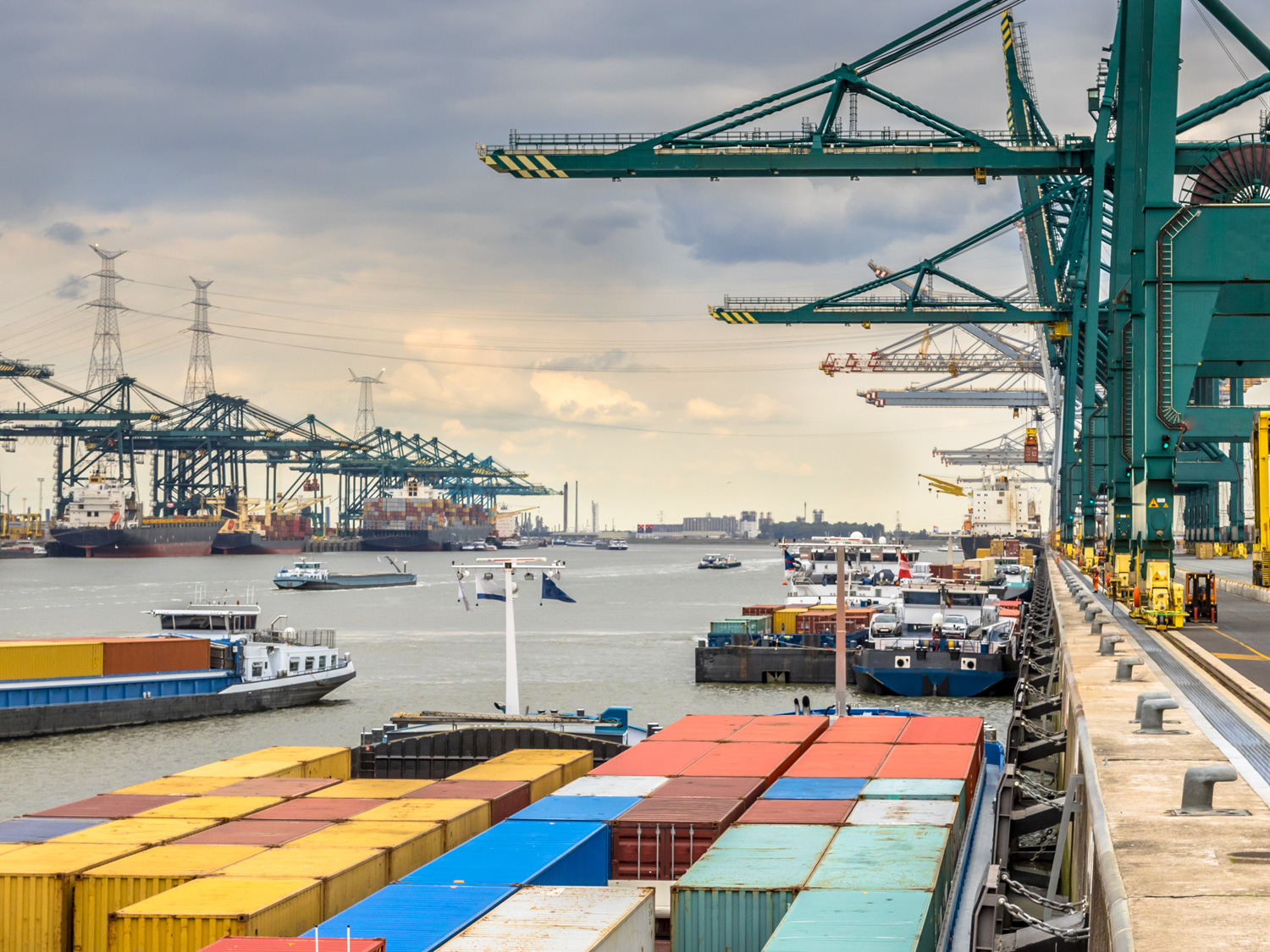
Despite hopes for a normalisation of container shipping from Asia, UK and European importers continue to struggle with excess inventory, continuing port disruption, blanked sailings and fewer direct vessel calls. This is in fact now the case globally, regardless of the continent and country, from the USA to Australia. It is not particular or restricted to Europe.

Schedule reliability is improving slowly, but with global statistics reported at 46% and just 30% from Asia, there is a long way to go to the 80% that is required for predictability. Or what was expected pre-Pandemic as a ‘given’. Supply chains and expectations have adjusted accordingly, and some now even want longer transit times to act as a floating warehouse, without a storage cost, it would seem.

As consumer confidence has impacted demand, volumes have fallen faster than expected, releasing capacity from port congestion and freight rates dropping from the record highs at the start of the year, to near bearable levels, although the contract market follows behind based on commitments by carriers and customers in early 2022. This will change as we enter the new year we anticipate.

But even as spot rates fall, shippers continue to face cargo rollovers, inaccurate information from carriers and service diminishment, as sailings are cancelled, blanked and direct calls reduced.

Blank sailing programmes across the major East/West trades, mean that 16% of capacity will be removed over weeks 40-44 and 12% of sailings blanked from Asia to Europe over the next 12 weeks, effectively removing 480,000 TEU’s of capacity.

The Global Shippers’ Forum has highlighted new vessel service calling patterns, noting that there has been an increase in the number of services connecting no more than two regions and a reduction in those linking more than two regions, which means that multi-port loop schedules are being replaced by shuttle services with transshipment required for containers to reach their destinations.

Headhaul and regional trade volumes in August 2022 were at their lowest level in six months, with imports from China down 7% in August, confirming the lack of peak season activity in key trade lanes.

In August 2022, port congestion absorbed 6-8% more of the fleet than in pre-pandemic 2019, but the fleet has grown over 11% in that period and capacity supply was therefore 3-5% higher, with the potential to grow even more.

How effectively carriers match capacity with falling demand will determine how much of the money they earned during the period of super-profitability they will hold on to.

Keeping pace with falling demand looks increasingly difficult, with the current new-vessel order book reaching 30% of the existing fleet size. The deliveries coming on stream and  capacity released by easing port congestion next year could be as high as 11.3%, while demand is forecast to grow lass than 2%.

The sustained demand and chronic supply chain congestion that guaranteed carrier windfalls over the last two years have gone, and market conditions are deteriorating quickly, as high inflation eats into consumers’ spending power, which means the shipping lines will have to ‘up their game’ to keep the profits flowing.

Over the next two years, HSBC estimates that overcapacity and falling demand,  unexpected intensity, will drive carrier profits down by more than 80%. In essence, further disruption and disfunction – just in a different guise – which will still have an impact on global trade.

For further information, the latest market intelligence, and more importantly to learn how Metro are dealing with the current and future challenges, please contact Andy Smith or Grant Liddell, for a discussion and collaborative approach to safeguard your supply chain. Metro’s freight forwarding solutions and logistics platforms are fit for purpose, regardless of the environment and global events. It’s what we successfully deliver regardless of the situation and conditions. EMAIL our managing director, Grant Liddell directly and he will get back to you to arrange a meeting.