shopping 2

<strong>Supply chains returning to just-in-time focus</strong>

The Chartered Institute of Procurement & Supply’s (CIPS) Procurement Futures conference brought together the most influential procurement professionals to figure out how to make supply chains more resilient, as buyers consider returning to just-in-time strategies, as port congestion eases.

The disruption of the past two years shifted supply chain operations to’ just-in-case’ (JIC) procurement strategies, but this focus is changing as port congestion and supply chain disruption has cleared and buying teams now consider how to deal with inventory levels.

Speaking at the conference, the CIPS chief economist confirmed that supply chains are increasingly moving back to ‘just-in-time’ (JIT) from ‘just-in-case’, but with significant overstocking in the UK, Europe and North America, many distribution centre's are full. 

In the worst case, merchants still hold inventory across their supply chain, with stocks at ports, or 3rd party storage facilities, although CIPS expect those stocks will work through the system by quarter one, or quarter two, after which supply chains will be fluid again.

With China opening up, the manufacturing capability for ‘just in time’ is returning but, while COVID19 turbulence and uncertainty has diminished, climate-related disruptions, tensions between the United States and China, and the war between Russia and Ukraine raise another question mark over how buyers might manage risk. 

These disruptions are tempting some to still maintain lots of inventory, to ensure business continuity, but that would be a mistake, as JIT remains the most efficient system. With interest rates rising, returning to JIC and adding inventory, harms performance and raises costs without necessarily improving resilience.

For businesses struggling with excess inventory and overstocked warehouses, the lean JIT operating model makes sense, and on many key routes and modes the concept of ordering inventory to arrive ‘just in time’ is viable again.

The supply chain is a system of deadlines, actions, processes and participants and no one can control the end-to-end supply chain, without visibility and the means to manage those four critical elements. 

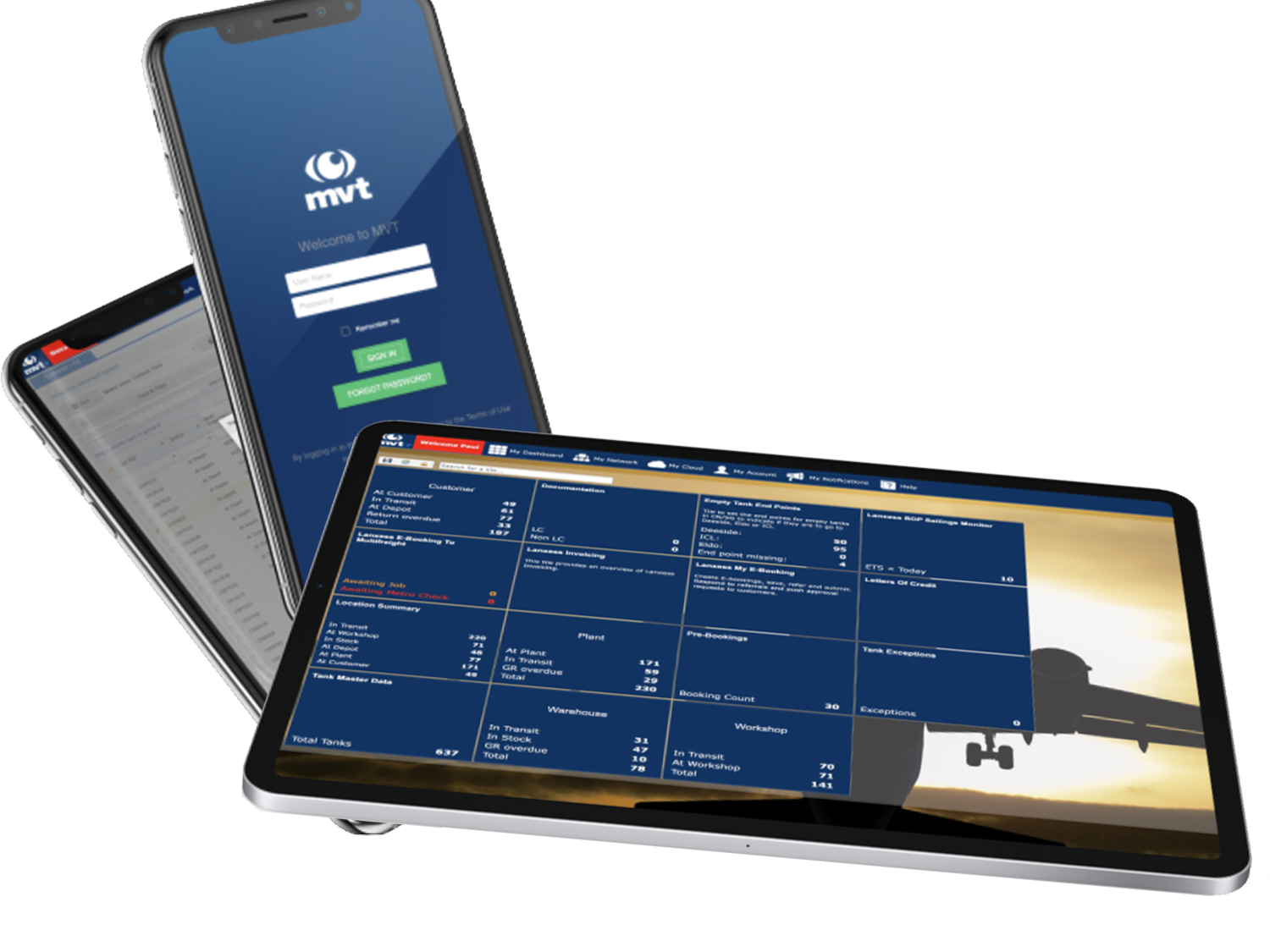
Instead of living on hope, traders can use our supply chain management platform, MVT, to remove supply chain risk, by evaluating their supply chain and determining where to locate and manage strategic capacity and inventory, to support changing demand patterns. 

In challenging economic conditions, smart executives use MVT to manage their supply chain effectively and tighten their control over inventory in their supply chain, while adapting their supplier footprint to meet customer conditions. 

MVT helps companies offshore, reshore or nearshore their vendors and production, by expanding procurement control and adapting supply chains to match the future.

Metro’s MVT supply chain platform reduces the cost, time and risk of re-sourcing to new vendors and locations, with PO management, visibility and communication tools that onboard and integrate new suppliers into the supply chain.

To learn more or to arrange a demo EMAIL Elliot Carlile.
Post pandemic visibility is key

<strong>Metro continues its digital transformation journey</strong>

While the freight and logistics sector may be accused of lagging other industries, in developing its digital capability, Metro continues to develop service capability that goes beyond offering just supply-chain visibility.

The investments we’ve made in systems and cloud networks create real-time dashboards that show shippers what’s happening in their supply chain network, with rich data that can be adapted and interrogated to show which supply chain lever to pull next.

Our immediate objective is getting more and more data digitised, to provide shippers with visualisation of their data, so they can analyse it and we can automate more operations, so that people can focus on adding value to the process.

Control, creativity, bespoke solutions and customer dialogue are at the core of our digital evolution and developments. We are investing heavily to ensure that we remain at the cutting edge of the industry and deliver beyond your expectations across all areas and functions within the business. It is relentless and an area that Metro are passionate about to ensure that we have a solid platform that performs for the next decade and beyond.

Metro’s new operations platform, which is powered by CargoWise, has been implemented in our customs brokerage and airfreight areas as well as our Elite brand, all of which are benefiting from workflow automation, which reduce errors and improve efficiencies.  

Implementation will continue throughout the summer of 2023, when sea imports and export customer services will transition, followed by customer specific teams to complete the rollout by October. This has been part of a 30 month journey which now has the end in sight, although it will not finish once the current destination is reached. Digital solutions and design never stand still.

Customers may see some slightly different documentation being produced as we migrate and they will be able to access our new track and trace application, with a notification engine, the DC Manager app, and more due to appear soon.

Conceived, created and supported by our internal technical solutions team, Metro’s bespoke supply chain management platform, MVT, is moving to version 4, to leverage the additional end-to-end visibility of shipments the CargoWise product provides and add more capability to our ECO product.  

Thanks to our business process solutions teams in the UK and India, no process has been left behind, as we strive for simplification and automation.  

These significant developments in digitisation, processes and data transparency is optimising our operations and commercial functions, which means they can become even more customer focused and available to serve.

The pandemic demonstrated the critical importance of effective supply chain visibility and digitising supply-chain operations, to understand what was happening, maintain control and initiate change.

We already embrace real-time carrier inputs and geo-fencing in enhancing data integrity and supply chain visibility, and look forward to adding more functionality as carriers add sensors to their container fleets, and AI interprets a rapidly changing environment.

We have many initiatives that have been and are being rolled out to our customers, and new concepts in design stage so there is much much more to come.

The Metro board continues to invest in internally developed and externally acquired innovation in 2023-2024, which promises to be an exciting period for the Technical Solutions Team and business as a whole. EMAIL Simon George, Technical Solutions Director, to learn more.

Long Beach Convention Centre

<strong>Making visibility a strategic tool</strong>

Now in its 22nd year, the annual TPM conference, in Long Beach California, considers the pressing supply chain and freight challenges affecting shippers globally. TPM attracts the most senior-level audience in the industry, including an executive team from Metro and is considered to be the ‘Davos’ of the shipping world.

Founded in 2001, TPM feature a rigorous program of topics and challenges, developed by specialised journalists covering international transportation and logistics. 

TPM annually presents the industry's most in-depth program, delving into the most pressing challenges affecting shippers and is a platform for a week of essential and intensive networking, negotiations, and relationship building among shippers, carriers, forwarders, technology providers, trucking operators, railroads, ports, terminals, and many other market participants.

Shippers who survived the pandemics’s supply chain disruptions did so by achieving visibility, but to improve their performance going forward, they must better manage the data they receive, participants in a TPM technology seminar agreed. 

Supply chain visibility became a priority challenge for importers during the pandemic, because many over-ordered merchandise, to provide buffer stock, against freight and logistics disruptions. 

With inventory held at origin, in containers, at transit points and warehouses throughout their networks, many shippers found they did not have the visibility they needed, at the locations where their inventory was being stored. 

While shippers may believe that their technology provider’s single platform collects all the data needed to track shipments throughout the supply chain, the reality is that the critical data generators are usually the shipping lines, airlines, logistics operators and warehouses moving or storing their cargo and that data is not being collated in real-time. 

Shippers learned over the past two years that they need an accurate view of their global supply chain, to overcome disruptions as they occur, using available information to make better, faster decisions and many technology providers were not up to the task.  

Metro is increasing use of predictive and AI technology, to collate real-time carrier updates, to maintain accurate vessel ETA’s, data for purchase order management, route optimisation and supply chain visibility. 

We are developing our telematics capability, to offer shippers a much more effective alternative to the data aggregators, who are quite simply compiling data from open APIs and screen scraping historic data. We favour the ‘smart container’ technology that a number of carriers are developing, and are actively involved with UN CEFACT in creating industry standards for sharing this data.

In addition to creating visibility along the supply chain, Metro’s technical solutions team have worked hard to ensure the quality of data and provide a suite of reporting tools that make it easier to interpret and implement actions in a meaningful way.  

To learn more or to arrange a demo EMAIL Simon George, Technical Solutions Director.

China exports

<strong>Supply chain shock absorber</strong>

The COVID-19 pandemic turned the public gaze towards supply chains and a previously unrecognised business sector became a household name, but after two plus years of navigating monumental challenges, supply chain executives, are faced with more challenges and need to secure their supply chains before the next shock hits.

Even as shippers try to make sense of the most tumultuous period ever seen in global supply chain management, the market is changing so rapidly that no matter how difficult the past few years have been, the future is once again taking centre stage.

Global container and air freight markets are shifting on multiple levels. Quickly moving on from the pandemic period and moving into a phase that had been expected to be a return to the pre-pandemic status quo, but is instead entirely new and unpredictable.  

Today’s supply chains are operating in a radically altered geopolitical and economic environment and a soon-to-be altered industry structure, with the impending breakup of the 2M Alliance likely to entirely transform the global container shipping market.  

Even as rates fall from their historic highs and port congestion and delays are fading, shippers need to recognise that the new era will have its own challenges, which need to be acknowledged, for the avoidance of risk.  

For the last 30+ years supply chains have been defined by opportunity to drive down cost and improve efficiency. Reliability was taken for granted and risk was an abstract that was rarely built into the business strategy and disruptive events were easily isolated, or avoided, because they were not part of the operating environment.  

All this has now changed and unpredictability has to be anticipated, even if there are no apparent triggers, because even if the industry looks normal, operational impacts will follow from a heightened perception of risk. 

This is demonstrated by the much greater than expected diversions from the West Coast to avoid ILWU labour disruption if contract negotiations stuttered or failed, as happened during earlier negotiations. 

And on top of unpredictable risk factors, shippers are balancing supply chain complexity against geopolitical demands over supply sources, but which is more resilient, having two suppliers for a critical component, or one that’s not ‘political’, It’s a really tough situation.

Metro’s MVT supply chain platform reduces the cost, time and risk of re-sourcing to new vendors and locations, with PO management, visibility and communication tools that onboard and integrate new suppliers into the supply chain.

To learn more or to arrange a demo EMAIL Simon George, Technical Solutions Director