
food study

Emirates signal ‘Preighter’ commitment

When airlines grounded passenger services as the Coronavirus spread, they removed almost 50% of the world’s air freight capacity. Responding to the global need for PPE, many airlines subsequently redeployed passenger (PAX) aircraft to boost belly-hold cargo capacity, while others ripped out the passenger cabins to create ‘Preighters’.

With demand for PPE tapering off in May, air freight rates from China and other key PPE sourcing regions have been falling by as much as 50%, encouraging many carriers to withdraw from routes.

Against this background of softening demand and rates, key Metro partner Emirates is modifying 10 of its passenger 777-300ERs to fly cargo only, offering a capacity of 17 tonnes in the cabin and 40-50 tonnes in the belly-hold.

Having chartered over twenty such PAX ‘Preighters’ to transport millions of much needed PPE units, Metro can testify to the effectiveness of these aircraft in securing and flying cargo.

With rising fuel prices and falling air freight rates, the economics of operating passenger freighters is becoming less sustainable, leaving many to question Emirates’ strategy.

All airlines are understandably desperate to get their revenue-generating machines back into the air and some basic (actually quite complicated) calculations do prove an insight into Emirates thinking.

Pre-Covid an imaginary passenger flight from Europe to Asia would generate a profit margin of around 15%, on a fully allocated passenger and cargo basis. Taking into account costs factors including fuel, crew, airport handling, landing fees, en-route charges, maintenance, insurance, lease and overheads.

Updating the same factors to reflect the market, after 90% of the world’s fleet is grounded and demand for PPE goes through the roof. Redeployed PAX aircraft, flying PPE in their belly-hold covered their cost allocations and broke even, while generating valuable revenues for the airlines.

Taking out the empty passenger seats to create fully-fledged ‘Preighter’, increases cargo capacity by up to 69%, depending on the aircraft, providing the opportunity to generate a positive contribution, which could be up to 10% per round trip. 

Emirates are not alone with carriers such as IAG offering customers whole aircraft charters, and Air France-KLM launching a partial-aircraft charter service.

Metro were recently recognised by Emirates SkyCargo as being one of their top partner agents in Europe and awarded a token of appreciation for our support. Metro use Emirates on a global basis. For further advice, information and costs, on this and other services, please get in touch.

Tags
Blanked sailings leading to rate rises

Blanked sailings leading to rate rises

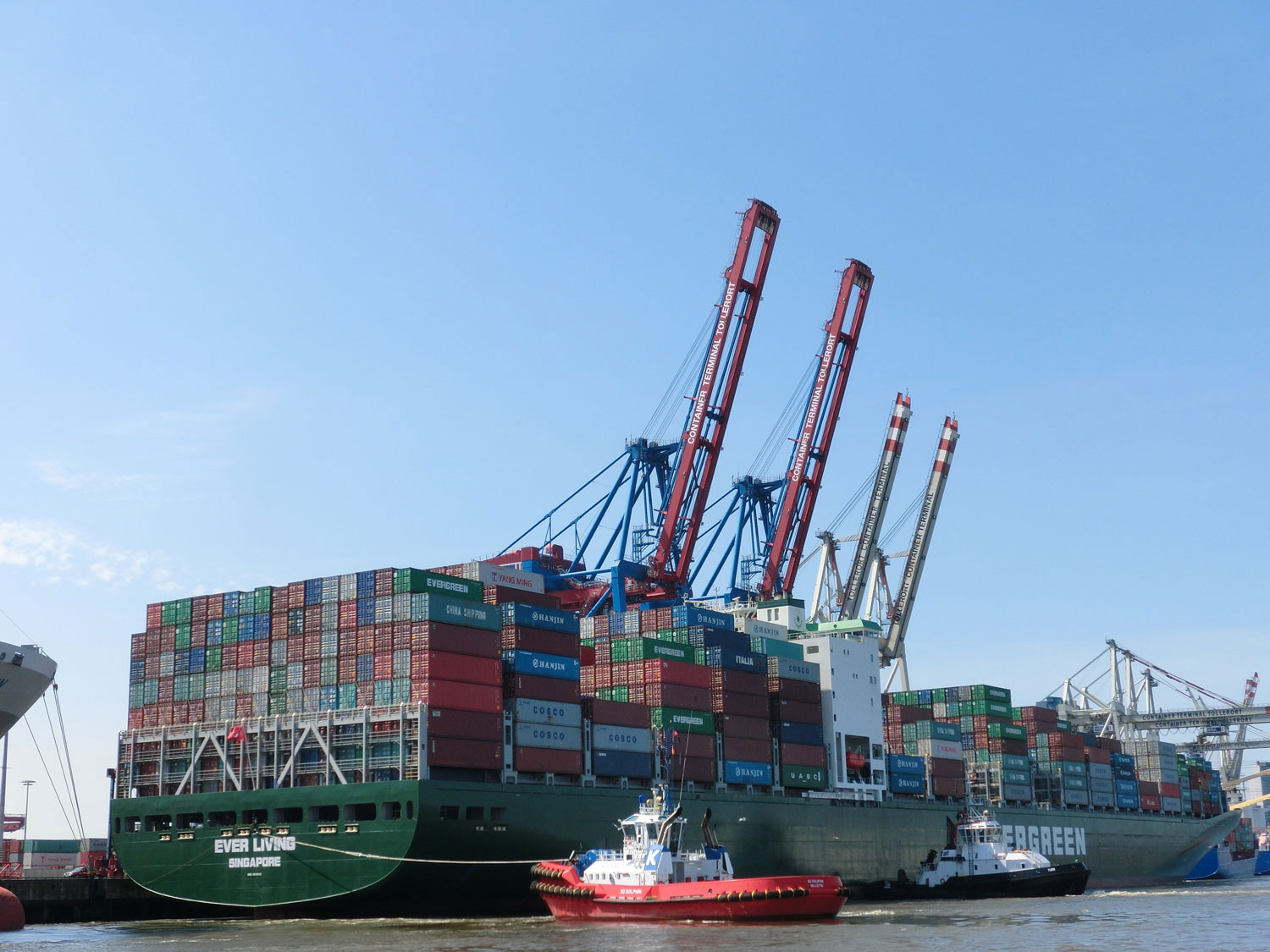
In spite of fears that container carriers could suffer catastrophic losses and go bankrupt en-masse, because of the Coronavirus pandemic impact on global trade, shipping lines are now enjoying the highest spot rates in 5 years on some trade lanes and could well end the year with big profits.

Just two months after respected analysts were forecasting shipping line losses of $800 million, if they lost some volume but kept rates stable, to $23 billion if volume and rates fell 10%, the carriers have managed, not just to maintain stable freight rates, but start to increase them substantially.

Carriers “blanked” an unprecedented number of Asia-U.S. and Asia-Europe sailings in the second quarter to balance vessel capacity, with reduced shipper demand expected, in light of coronavirus lockdowns and social distancing.

As it turned out, cargo demand exceeded un-blanked vessel supply, causing rates to rise, particularly in the Asia-West Coast trade, with rates shooting up 57% in June, to 2018 levels, when U.S. shippers were driving huge demand to import cargoes to beat tariff deadlines.

Metro has volume and rate commitments across the main shipping lines and alliances, to keep our customers’ supply chains operating

Trans-Pacific rates to the West Coast are up 84% year-on-year, while rates to the East Coast are up 21% and China-North Europe rates up 26%.

With vessel capacity largely under the control of just three large global carrier alliances, calls for regulators to step in and protect shippers - who are paying higher costs, as a result of carriers artificially restricting access to capacity - will increase.

For manufacturers and business owners reopening their businesses and ensuring the protection of their workforces and their customers, the extra costs and uncertainty around the supply chain further complicate these issues.

With less capacity, ocean carriers are creating a sellers market, an environment into which they can introduce general rate increases and surcharges at a whim.

The concern for economists is that the lines concentration on revenue recovery, rather than service, will simply drive supply chain costs up and threaten a swifter economic recovery.

Metro has volume and rate commitments across the main shipping lines and alliances, to keep our customers’ supply chains operating.

With spot rates increasing to their highest recorded level in 5 years, we can offer the biggest volume shippers better deals than going directly to the lines.

Coronavirus exposes supply chain weakness

Coronavirus exposes supply chain weakness

The Covid-19 pandemic and subsequent global lockdown has stalled and frozen international transport and the infrastructure that supports it, exposing vulnerabilities in the supply chains of raw materials, components and finished goods.

The current global supply chains of many businesses are fragile and teeming with potential problems, which may be evidenced by product flow interruptions.

Single-sourcing has been highlighted as one of the most common critical weaknesses that can undermine and disrupt supply chains.

New health threats and a myriad of other perils will continue to emerge and each one will potentially have significant impact on supply chains, and particularly those that rely on single sources of supply.

Firms that embraced the concept have been facing particularly acute problems during the pandemic, initially from China and now most particularly from India.

The risks of single sourcing are very evident to supply chain professionals, who are always averse to ‘putting all their eggs in one basket’, but they are often overruled by their procurement colleagues, who are more focused on cost savings and the bottom line impact.

Metro systems replicate the physical supply chain virtually and instantly connect all participants, providing the owner with end-to-end visibility and control of their supply chain

Strategic direction in recent decades has made some sectors particularly vulnerable.

There are over 1,500 healthcare firms with facilities in China, and India that has been a major pharmaceutical manufacturer for years, with both countries critical to the medical supply chains of Europe and North America.

The massive flows of PPE and essential coronavirus-related cargo out of China drowned out the needs of other products and their supply chains, with delays ranging from several days to months, depending on the amount of cash available to keep product moving.

Diversifying supplier base and their location will take time, because sourcing potential partners and conducting due diligence, means that most firms will be slow to transform.

Metro’s technology simplifies many elements of what would otherwise be a very daunting exercise.

Our cloud-based supply chain management platform, MVT, replicates the physical supply chain virtually and instantly connects all supply chain participants, providing the owner with end-to-end visibility of their supply chain and control over every additional vendor.

Which means that it is simple to extend the platform to embrace new vendors, in new geographies, with new supply chain functionality and timelines.

Metro work with many leading manufacturers, across many regions, managing the movement of 000’s of SKUs every day.

Data collation, interrogation and interpretation is critical to their operations, which is why our technical team are increasingly working with blockchain, big data and artificial intelligence initiatives to enhance and evolve our solutions.

We are already seeing the inclusion of big data in active enhancements: Risk analysis, identification and alerting, with instant supply chain modification; and global asset tracking, to within one metre, with continuous environmental monitoring feeding back data to identify performance issues and target problem areas.

coronavirus threat to car industry

Coronavirus threat to car industry

The UK car industry's trade body says one in six jobs are at risk of redundancy without help from the government in restarting production.

The Society of Motor Manufacturers and Traders (SMMT) says that one in six jobs are at risk, without help from the government including emergency funding, permanent short-time working, business rate holidays, and VAT cuts.

While showrooms are reopening and production lines are restarting, more than 6,000 jobs have already been lost this month.

The SMMT estimates the impact of lockdown will cut annual car and light commercial vehicle production by one-third to 920,000 vehicles this year.

UK car manufacturing came to a halt in April and is down 99.7% against the same month last year.

In Germany, production slumped by 90% in April, but government subsidies on EV and PHEV vehicles have been increased by 50% in an attempt to spur demand.

Across Europe it is estimated that production levels in May were down 70% compared to last year.

Experts fear that a deep economic crisis may keep private buyers from buying and companies from investing, leading to at a decrease of 35% in sales in Europe.

Some UK plants refocused to make 711,495 items of personal protective equipment for health workers.

Metro is lobbying for the automotive sector and adapting systems to provide duty/tax free importing

Recovery depends on efforts to reinstall production processes, under post-Covid precautions, but these are estimated to reduce output by 30-50% per shift.

The loss of 400,000 cars that would normally have been made is expected to cost the British car industry up to £12.5bn in revenues.

In April, there were 830 new car engines made at UK plants, 781 of which were exported. This level was down 99.5% on the year before.

As well as assistance to restart production, the industry is anxious about securing a trade deal with the EU.

Metro, through our trade association and professional institutes, is lobbying government on behalf of the automotive sector to waive tariffs on components. At the same time we are adapting our systems to offer duty and tax suspension support to automotive clients, should tariffs be enforced.

"Certainty that a full, zero-tariff deal will be in place by the end of the transition period will give businesses on both sides chance to prepare, and help drive investment into the new skills, facilities and technologies that will be integral to delivering a zero-carbon future for the UK," the SMMT said.