Metro truck at bay

Brexit Facts: The Transit Accompanying Document (TAD)

As a member of the European Union, UK goods move freely between and through other member states without any formalities. As of 23:00 GMT on the 31st December 2020 freedom of movement will no longer apply and formalities will be necessary at the interface between the UK and the EU and across internal EU borders.

The EU single market and customs union means there are no trade or customs barriers between them, while maintaining a protective wall from imports outside the bloc. 

This means that import/export procedures will have to be followed and certain documentation provided.

The UK has successfully negotiated membership of the Common Transit Convention (CTC) which allows some customs processes to be done away from the border. 

Traders will only have to make customs declarations and pay import taxes and duties when the goods arrive at their final destination.

Traders exporting goods under transit need to provide a guarantee to cover any potential customs duties and import VAT. Businesses using transit should apply to be authorised to use Customs Comprehensive Guarantee (CCG) and once approved, obtain a guarantee from a bank or financial institution. 

Although systems will be mainly paperless, the Transit Accompanying Document (TAD) must accompany the goods and be presented at any transit office and at the destination. 

The TAD carries the Movement Reference Number (MRN) in both number and QR code form and the latter allows faster processing by barcode reader at transit offices. 

The consignor of the goods will need to enter their TAD MRN to GVMS in place of an export declaration to complete their GMR as well as completing an EXS declaration. 

Before a movement can start, an export declaration will need to be submitted as well as a transit declaration. Completing a transit declaration requires: the details of the planned journey for the goods, the guarantee reference number or details of the guarantee waiver and the local reference number. The master reference number from the export declaration and S&S declaration may also need to be included. 

If the trader is an Authorised Consignor, after the movement is released to the Transit procedure the driver will be given a TAD and can then (and only then) proceed directly to the port of departure.

If the trader is not an Authorised Consignor, the driver will be given a Local Reference Number (LRN) and must then present the LRN and the goods at a nominated Office of Departure. 

Release of the goods to the system will be completed there and the TAD will be issued, allowing the driver to proceed to the port. 

On arrival, the TAD must be presented to the customs authorities in line with their procedures.

If the destination is the premises of an Authorised Consignee, the driver may proceed straight there and present the TAD to allow the transit procedure to be closed. Otherwise he/she must go via an Office of Destination for that to be done.

NOTE - THE TAD WILL APPLY TO ALL IMPORTS AND EXPORTS. MOVEMENTS BETWEEN THE EU AND UK WHEN MORE THAN ONE BORDER IS CROSSED DURING TRANSIT. THIS MUST BE RAISED IN ADVANCE OF THE TRANSPORT JOURNEY COMMENCING. 

Failure to discharge the TAD will result in either the consignor or consignee becoming liable in full for the VAT and duty applicable to the consignment. 

This is why the CCG authorisation is required to guarantee any payment due. 

For more information please contact Jade Barrow or Andrew White who are leading our Brexit Task Team.  

EU UK negotiations

Politics Round-up, 15th October

As the legal battle lines are being drawn by the EU for their day in court, the divorce talks continue to run in parallel.

Following the conclusion of last week's round of Brexit talks, Boris Johnson and European Commission President Ursula von der Leyen held a call on 3rd October to discuss the status of the negotiations. 

In their statement following the call, they reiterated their agreement on the importance of finding an agreement, but stated that significant gaps remain. 

The UK and EU Chief Negotiators (David Frost and Michel Barnier respectively) have been instructed to intensify their work and the deadline for negotiations has now been extended to 30th October; however this was not a breakthrough moment and significant doubts remain as to whether a deal is possible.

So it looks like Boris’ deadline of 15th October for a ‘deal on the table’ has been exposed as bluster, but the signs from those closest to the talks are not making much by way of positive noises.

Or has it?

As the Brexit deadline is rapidly approaching and EU and UK officials hold last-ditch talks today after the Brussels bloc vowed to ignore the Prime Minister's demands.

Britain, the world's sixth-biggest economy, left the EU in January and has since been locked in painstaking talks with the Union. 

EU leaders will hold a summit in Brussels on Thursday and Friday to assess progress after Mr Johnson set a deadline for 15th October for a deal to be reached before the transition period ends on 31st December.

But, pressure is mounting after the EU’s chief Brexit negotiator Michel Barnier said the two sides are yet to make a significant breakthrough throwing doubt over whether Mr Johnson's looming deadline will be met.

The Prime Minister will speak again to the president of the European Commission Ursula von der Leyen this afternoon (14th October) as his deadline for progress in post-Brexit trade talks draws near.

But, it is understood that Mr Barnier and the UK’s chief Brexit negotiator David First will actually announce a “deal in principle or a pathway to a deal” instead on Thursday and will continue with talks until a legal text is drafted.

Early indications suggest that 3rd November could be the final day when the legal text is ready for ratification.

Another interesting couple of days ahead in the Brexit world, so watch this space!

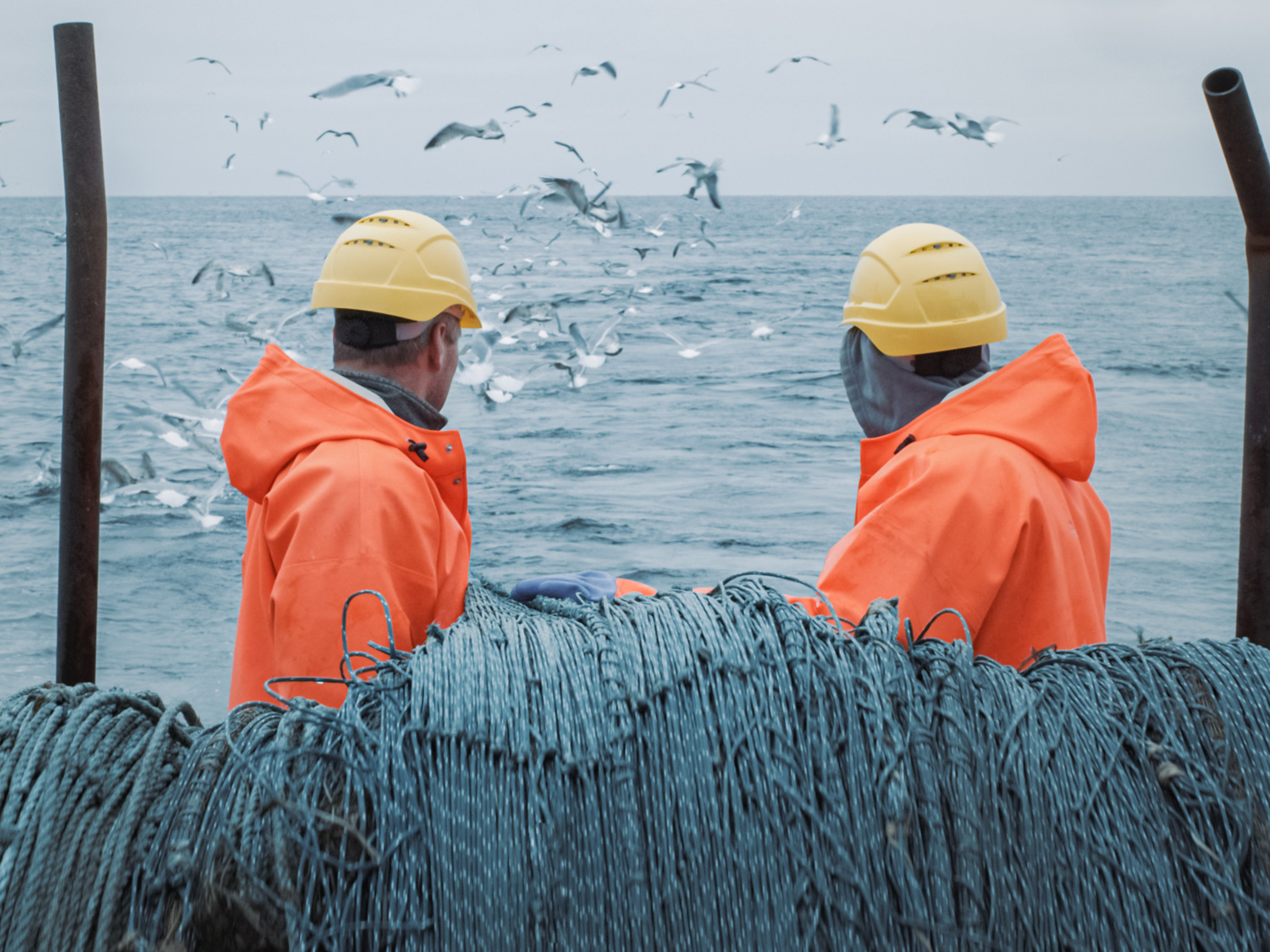
trawler

Fishing for a trade deal, that keeps wriggling away

The EU has launched legal action against the UK after Boris Johnson failed to respond to Brussels’ demand that he should drop legislation that would overwrite the withdrawal agreement and break international law and any trade deal just keeps slipping away.

Ursula Von Der Leyen, the European Commission president, announced that the UK had been put on formal notice over the internal market bill tabled by the prime minister last month.

Last week, in attempt to break the trade agreement impasse, Boris Johnson’s chief negotiator Lord Frost presented the EU with a three-year adjustment period over fishing rights. 

Despite this major concession from the UK, a fisheries agreement remains elusive as the clock ticks down on the Brexit negotiations.

Costal European Union member states are increasingly demanding Michel Barnier take a much harder line over fisheries in trade talks with the UK, with France desperately trying to retain unrestricted access to British waters, potentially handing a huge boost to Boris Johnson as negotiations enter a critical phase.

EU officials insist an FTA is not possible without a deal on fisheries, which they think provides Mr Barnier with considerable leverage, but some fisheries organisations fear he is not yet using that advantage handed to him.

On Monday, the  German Chancellor met with EU officials, namely French President, Emmanuel Macron, to urge them to drop their demands on fisheries.

Ms Merkel was also supported by her Foreign Minister, Heiko Mass, who called on EU states to support a Brexit compromise.

States such as France, want continued access to British waters similar to the Common Fisheries Policy, which the UK rejects, in favour of the three-year transition proposal, the two sides would use to adjust to new measures, thus giving coastal communities time to adapt.

Fishing quotas would also be reduced year on year.

So, as things stand, if a deal cannot be struck, the automotive industry stands to take a £100bn hit. 

Any deal based around fishery concessions would be potentially bad for the fishing industry, but no deal would be a disaster for the Automotive industry and every other sector that depends on EU trade and cooperation.

A lot of people are going to be unhappy regardless of the outcome. 

Despite the rhetoric, there does appear to be a softening approach and it is looking more likely that a free trade deal can be achieved. This will be good news and we expect an announcement over the next week. 

Whatever the outcome, it is a 100% certainty that customs formalities and processes, relating to movement of goods between the UK and EU, will commence on the 1st January 2021. 

Any trade deal will not negate the need for customs clearances and so we are continuing at full steam to raise awareness of our  unique Brexit brokerage platform. 

Our Brexit Task Team recommend that you have a fully functioning trade compliance process in place at the very latest November this year. For further information, contact Andrew White or Jade Barrow. 

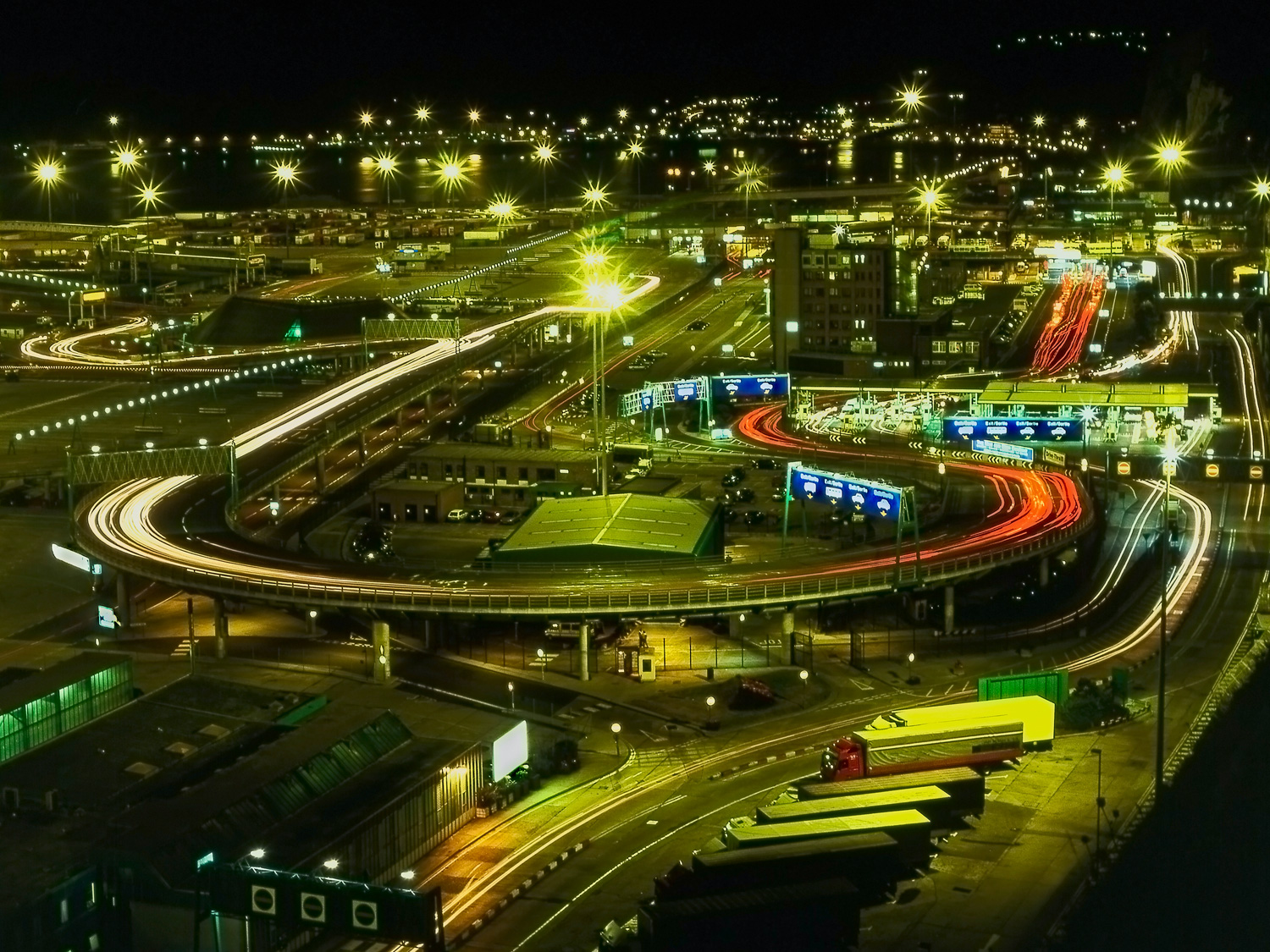
Dover blur

Automating Brexit for you

Customs declarations will rocket from the current 50m a year to 250m after Brexit, overwhelming the country’s customs brokerage capacity and HMRC’s capability to manage physical processes, which is why we have developed digital Brexit solutions.

The government’s Border Operating Model, released by the Border and Protocol Delivery Group in July, definitively outlines Brexit border processes and responsibilities for EU/UK imports and exports, including the much-vaunted ‘light touch’ regime for imports and the opportunity to defer customs declarations, VAT and Duty for six months.

Access to the ‘light touch’ regime and its associated cashflow benefits require HMRC authorisation to use simplified procedures, which Metro holds and can offer to its customers.

Providing ‘light touch’ support to importing customers and submitting the critical declarations for exporting customers means that Metro will be processing up to an estimated fifty thousand additional customs documents every month and digital automation will be key.

We have been working on our own transition planning for the last few years, developing a suite of advanced software tools in-house. 

Our objective is to automate data receipt, analysis and output through machine learning, optical character recognition (OCR), artificial intelligence and data transfers to HMRC. 

We recognise that digital solutions will not be suitable for every customer or situation and a certain amount of human expertise is required for these interventions. 

Our HR team has been recruiting talent through the earlier phases of Brexit, predominantly  colleagues at all locations and we continue to take on new members of the team to accommodate the huge influx of customs entries and administrative processes that ensure our customers continue to trade seamlessly with The European Union.

We have recently added 10 new starters to the Brexit team, at our Birmingham facility and a recruitment drive is currently underway at our overseas business process outsource (BPO) operations in Malaysia and India, to assist with the automated platforms we are establishing directly with customs authorities.

For further information on how we will assist you in the new environment in 2021 please call Andrew White or Jade Barrow who are leading our Brexit Team Task Force and will have the answers to most of your questions as the situation continues to develop and unwind.